HISTORY / CULTURE
The FDA: Who Gets to Decide What Medicine Is?
A medicine sold before anyone had to prove it safe
In 1937 the S.E. Massengill Company of Bristol, Tennessee, marketed a liquid medicine called Elixir Sulfanilamide HIST-F02. According to an FDA history published in 2006, 107 people died from a poisonous ingredient in it, and many of them were children HIST-F01. The same account records that the mother of one of them, a six-year-old girl from Tulsa, wrote to President Franklin Roosevelt about her grief HIST-F01.
What makes the episode a turning point is not only the deaths. It is what the law of the time did and did not require.
The original federal drug law, the Pure Food and Drugs Act of 1906, prohibited misbranded and adulterated foods, drinks and drugs in interstate commerce HIST-F01. Its enforcers were in the Department of Agriculture’s Bureau of Chemistry, an institutional predecessor of the agency later known as the Food and Drug Administration HIST-F01. In other words, the agency's work began before it had its current name.
That law had clear limits. Nothing had to be submitted to the government before a drug was sold. Drugs had to meet standards of strength and purity. If officials believed a label was false or misleading, the burden was on the government to prove it HIST-F01. Courts and Congress spent decades arguing over even that. The FDA's history describes a seizure case that began in 1910, in which the Supreme Court ruled that false effectiveness claims fell outside the 1906 Act, and a 1912 amendment that required the government to prove intent to defraud, which it says proved difficult HIST-F01.
A bill to overhaul the 1906 law had been introduced in 1933 but stalled. Revised legislation passed only after the Elixir Sulfanilamide deaths HIST-F01. The Federal Food, Drug, and Cosmetic Act, signed on June 25, 1938, required manufacturers for the first time to show that a drug was safe before it could be marketed, and to submit an application to the FDA first HIST-F01.
Even then, approval was passive. If the FDA did not act on an application within a set time, it was automatically approved HIST-F01.
This article explains how that system changed, who actually produces the evidence behind a modern medicine, what approval does and does not mean, and where the agency's authority stops. One caution applies throughout. Every source in this article is published by the FDA itself. They describe how the agency sees its own role. That is useful context for its rules and procedures, but these explanatory pages are not substitutes for statutory text or an independent judgment of how well the agency performs.
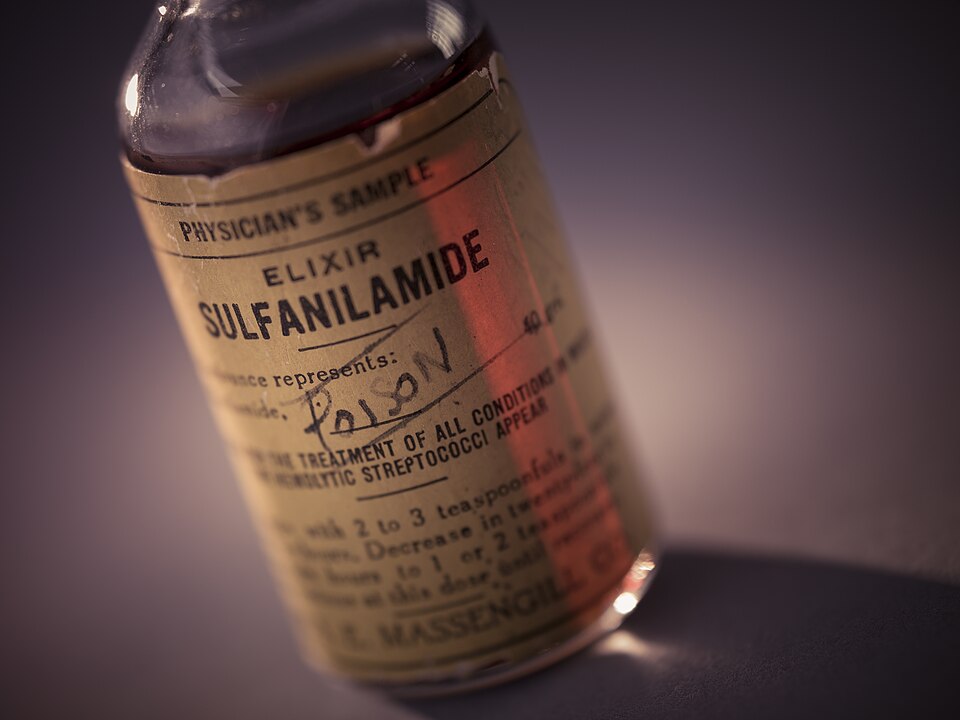
FIG. 1 · 2019-05-28 · PUBLIC DOMAIN (U.S. FEDERAL WORK)
1962: from "safe" to "safe and effective"
The next large change came in 1962. The FDA's history says that news reports that year about Frances O. Kelsey, an FDA medical officer who had kept the sedative thalidomide off the US market, aroused public interest in drug regulation HIST-F01. Thalidomide had been associated with the birth of thousands of babies with malformations in Western Europe HIST-F01. (Keeping a drug off the market is not the same as guaranteeing that nobody in the country was ever exposed to it; that question is outside this article.)
The same history is careful not to make one person or one scandal the whole explanation. It quotes an FDA official recalling that Senator Estes Kefauver had already held hearings on drug costs, the weak science behind effectiveness claims, and "fantastic claims" in advertising. Thalidomide put the law "in play" HIST-F01.
The Kefauver-Harris Drug Amendments, passed in October 1962, changed the basic question HIST-F01:
- Firms now had to provide substantial evidence of effectiveness for a product's intended use, not only evidence of safety.
- That evidence had to consist of adequate and well-controlled studies.
- The FDA had to specifically approve an application before the drug could be marketed. Silence no longer meant yes.
- The amendments also called for rules on investigating new drugs, including informed consent from study participants. They formalised good manufacturing practices, required adverse events to be reported, and moved oversight of prescription drug advertising to the FDA.
Two later steps in the agency's history connect to other stories on this site. In 1970 the FDA required the first patient package insert: oral contraceptives had to carry information about benefits and risks in language patients could understand HIST-F01. Our history of the pill covers that product. In 1972 the FDA began reviewing over-the-counter drugs for safety and effectiveness HIST-F01.
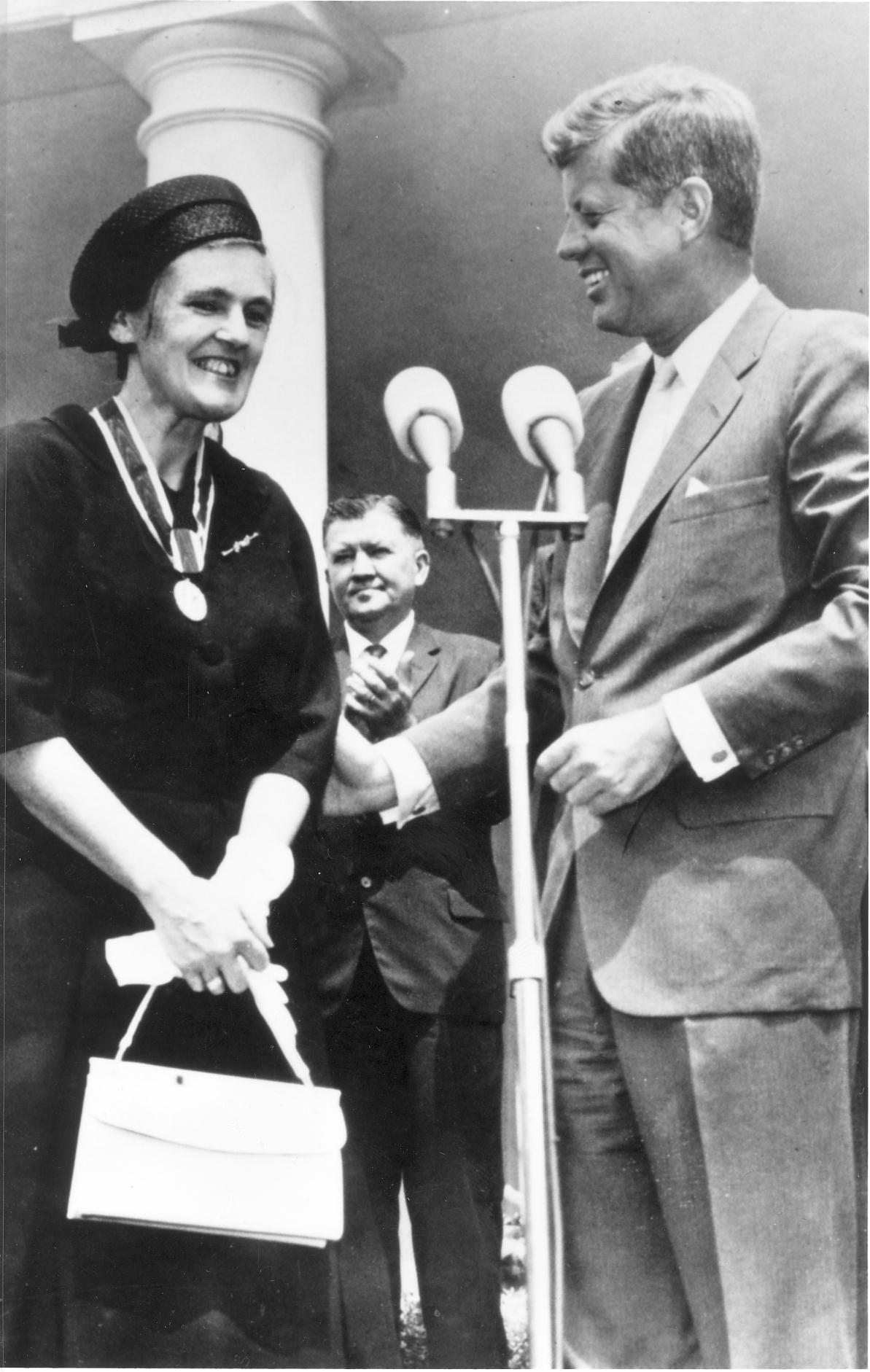
FIG. 2 · 1962-08 · PUBLIC DOMAIN (U.S. FEDERAL WORK)
Who does the research?
A common misunderstanding is that the FDA tests new drugs itself. Mostly, it does not. It reviews evidence that others generate.
FDA's own explainer calls the developers sponsors: companies, research institutions and other organisations that take responsibility for developing a drug PROC-F01. A sponsor that wants to test a drug in people submits an investigational new drug application. It shows the FDA its earlier laboratory results and its plans for human testing, and the FDA decides whether it is reasonably safe to proceed PROC-F01. Human studies can begin only after review by the FDA and by an institutional review board. That is a panel of scientists and non-scientists that oversees the research, checks that participants are informed of risks and have consented, and approves the study plan PROC-F01.
The studies then gather evidence, typically in stages, about side effects, whether the drug works in people with the condition, and how it performs in larger and more varied groups PROC-F01. In controlled trials, people receiving the drug are compared with similar people receiving something else, usually a placebo or a different drug PROC-F01.
When the sponsor believes it has enough, it submits a marketing application. For a new drug, that is a new drug application, containing the supporting evidence and analyses, and information about how the drug behaves in the body and how it is made PROC-F01. FDA reviewers then evaluate it.
The FDA's pages describe typical study sizes and review targets. Those figures describe typical studies and program targets, not fixed rules for every drug, so this article does not repeat them. What matters for a reader is the structure: the sponsor is responsible for developing the drug and submitting the evidence; the regulator sets standards, reviews the evidence and decides. That division of labour is a strength, because experts scrutinise the data. It also means the evidence is only as broad as the questions the studies were designed to answer.
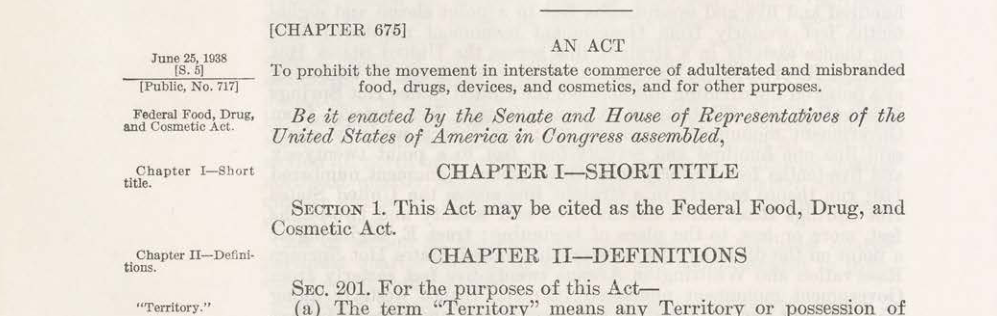
FIG. 3 · 1938-06-25 · PUBLIC DOMAIN (U.S. FEDERAL STATUTE)
What approval means, and what it doesn't
FDA states plainly that "safe" does not mean a drug has no side effects. It means the agency has determined that the benefits of using the drug for a particular use outweigh its potential risks REG-F01. When a drug is prescribed for its approved use, FDA says, the agency has evaluated its benefits and risks for that use, and there is approved labelling telling health professionals how to use it safely and effectively for that use REG-F01.
Three consequences follow.
Approval is specific. It covers a product, for a use, under conditions described in its label. Each new indication or claim is a separate change that needs its own approval REG-G02. Approval of one product is not an endorsement of every product containing the same molecule, or of every use someone might imagine.
Approval is not zero risk. Benefit–risk is a judgement, and FDA's history notes that not every effect of a drug can be predicted in clinical trials. That is why the agency describes ongoing safety monitoring, including adverse-event reporting, label changes and, in rare cases, withdrawal HIST-F01.
Off-label use is a different thing from an unapproved product. Once a drug is approved, FDA says, health professionals generally may prescribe it for an unapproved use when they judge that medically appropriate for their patient. Examples include a different disease, a different form or a different dose REG-F01. Sometimes there is no approved treatment, or approved treatments have failed REG-F01. But FDA is explicit that its approval does not establish safety and effectiveness for that unapproved use REG-F01.
A prescriber's judgement is not evidence that a use works. This article also does not suggest that prescribing discretion overrides other laws, such as controlled-substance rules. And off-label prescribing of an approved drug is not the same as selling a product that was never approved at all.
Four roads to the pharmacy shelf
Not everything sold as a remedy has been through the same process. FDA's own pages describe very different pathways. The table below summarises them in simplified form.
| Pathway | What FDA reviews before sale | What it does not mean | Source |
|---|---|---|---|
| Product-specific application (new drug application, abbreviated generic application, or biologics licence) | The specific product's application. A generic application shows the product matches an approved reference drug and is bioequivalent, relying on FDA's earlier finding of safety and effectiveness | Not approval of other products or other uses | REG-G02; HIST-F01 |
| OTC monograph | Products may be marketed without an approved product-specific application if they meet the monograph's standards (ingredients, labelling and other requirements) and other legal requirements | Not an individual approval of each product; not unregulated | REG-G02 |
| Dietary supplement | FDA does not have authority to approve supplements for safety and effectiveness, or their labelling, before sale | Not unregulated: companies must ensure their products meet safety standards; FDA inspects facilities, reviews labelling and acts after products reach the market. A product intended to treat or prevent disease is generally a drug | REG-N01 |
| Compounded drug | Compounded drugs are not FDA-approved; FDA does not review their safety, effectiveness or quality before marketing | Not FDA-approved, even when lawfully made. Compounding can meet a real medical need, but poor-quality products have caused serious injury and death | REG-F02 |
Two warnings follow from the table. "Not individually approved" is not the same as "unregulated." And "compounded" is not the same as "FDA-approved." Whether a particular ingredient or product is lawful is a separate question that this article does not try to answer.
Faster approval and the surrogate question
For serious conditions with an unmet medical need, FDA has an accelerated approval programme. It allows earlier approval based on a surrogate endpoint PROC-F02. FDA defines a surrogate endpoint as a marker, such as a laboratory measurement, an image or a physical sign, that is thought to predict clinical benefit but is not itself a measure of clinical benefit PROC-F02. Using one can considerably shorten the time before approval PROC-F02.
The trade-off is built in. Companies must still conduct studies to confirm the expected benefit. If a confirmatory trial shows real clinical benefit, FDA grants traditional approval. If it does not, FDA has procedures that could lead to the drug's removal from the market PROC-F02. FDA's 2006 history said accelerated approval was formalised in 1992 and gave the example of tumour shrinkage occurring before evidence of improved survival HIST-F01.
A hypothetical shows why the distinction matters. Imagine a drug that lowers a blood marker linked to a disease. The marker falls; that is evidence. But patients care about living longer or feeling better, and the marker may or may not track those outcomes. Accelerated approval does not mean "no evidence." It means the evidence is of a particular kind, with a further question still to answer.
Accelerated approval is one programme among several that speed up review or development. This article does not treat it as representative of all of them.
Who pays for review?
In 1992 Congress created the Prescription Drug User Fee Act (PDUFA). It authorises FDA to collect fees from companies that submit certain human drug applications, or that are named as sponsors of certain approved prescription products FUND-F01. The law must be reauthorised every five years. It was renewed in 1997, 2002, 2007, 2012, 2017 and 2022. The 2022 reauthorisation runs through September 2027 FUND-F01.
FDA describes the fees as helping to speed the review process FUND-F01. Its 2006 history presents added staff and review-time commitments as the rationale, while reporting the agency’s position that review standards would be preserved HIST-F01.
That is the agency's account. A fee-funded review system reasonably raises questions:
- How are review goals balanced against thoroughness?
- How are the fees negotiated?
- What does it mean for the regulated industry to fund part of the regulator's work?
Asking those questions is not the same as answering them. The sources in this article do not show that fees buy approvals, and they do not measure how fees have changed review quality. This article makes no such finding. It also does not report current fee amounts or funding shares, which would need a separate audit.
What to check before you believe an enhancement claim
The FDA's story is not that of an infallible guardian or a single villain. It is the story of a set of rules, built in stages, for deciding what counts as evidence and who must produce it. Those rules have real limits. When someone claims a product can make you stronger, sharper or younger, the system gives you a checklist:
- What exact product is it? A named, approved product is not the same as anything sharing its ingredient name.
- What is it approved for, if anything? An approval covers a specific use REG-F01.
- Who was studied? People with a disease, healthy volunteers, or nobody at all?
- What was measured, and against what? A surrogate marker or an outcome people care about? Placebo or nothing? PROC-F01; PROC-F02
- Which pathway is it on? Approved application, OTC monograph, supplement or compounded product? REG-G02; REG-N01; REG-F02
- What remains uncertain? Confirmatory studies, rare harms and long-term effects PROC-F02; HIST-F01.
- When was this true? Rules, labels and policies change; check the date.
These questions run through other stories on this site:
- the pill and its first patient package insert
- the move of anabolic steroids from medicine to muscle
- the difference between a regulated product and a marketing label, in our guides to peptides and nootropics
The FDA does not decide everything about what medicine is. But it decides a great deal about what counts as proof, and readers who understand its rules are harder to fool.
Sources & Further Reading
All sources below are FDA publications describing the agency's own history, rules and programmes.
-
HIST-F01 Meadows M. "Promoting Safe & Effective Drugs for 100 Years." FDA Consumer, January–February 2006 (FDA page content current as of April 23, 2019). https://www.fda.gov/about-fda/histories-product-regulation/promoting-safe-effective-drugs-100-years
-
PROC-F01 FDA. "The FDA's Drug Review Process: Ensuring Drugs Are Safe and Effective" (content current as of November 24, 2017). https://www.fda.gov/drugs/information-consumers-and-patients-drugs/fdas-drug-review-process-ensuring-drugs-are-safe-and-effective
-
REG-F01 FDA. "Understanding Unapproved Use of Approved Drugs 'Off Label'" (content current as of February 5, 2018). https://www.fda.gov/patients/learn-about-expanded-access-and-other-treatment-options/understanding-unapproved-use-approved-drugs-label
-
REG-N01 FDA. "FDA 101: Dietary Supplements" (content current as of June 2, 2022). https://www.fda.gov/consumers/consumer-updates/fda-101-dietary-supplements
-
FUND-F01 FDA. "Prescription Drug User Fee Amendments" (content current as of October 1, 2026). https://www.fda.gov/industry/fda-user-fee-programs/prescription-drug-user-fee-amendments
-
PROC-F02 FDA. "Accelerated Approval Program" (content current as of August 25, 2026). https://www.fda.gov/drugs/nda-and-bla-approvals/accelerated-approval-program
-
REG-G02 FDA. "Small Business Assistance: Frequently Asked Questions on the Regulatory Process of Over-the-Counter (OTC) Drugs" (content current as of November 18, 2022). https://www.fda.gov/drugs/cder-small-business-industry-assistance-sbia/small-business-assistance-frequently-asked-questions-regulatory-process-over-counter-otc-drugs
-
REG-F02 FDA. "Understanding the Risks of Compounded Drugs" (content current as of June 22, 2026). https://www.fda.gov/drugs/human-drug-compounding/understanding-risks-compounded-drugs
-
HIST-F02 Ballentine C. “Sulfanilamide Disaster: Taste of Raspberries, Taste of Death—The 1937 Elixir Sulfanilamide Incident.” FDA Consumer, June 1981. https://www.fda.gov/about-fda/histories-product-regulation/sulfanilamide-disaster (editor read title, opening chronology and September–October 1937 paragraph; no current clinical/toxicology recommendations inferred).