EVENT / 1935 / BODY
The Year Testosterone Got a Name and a Formula
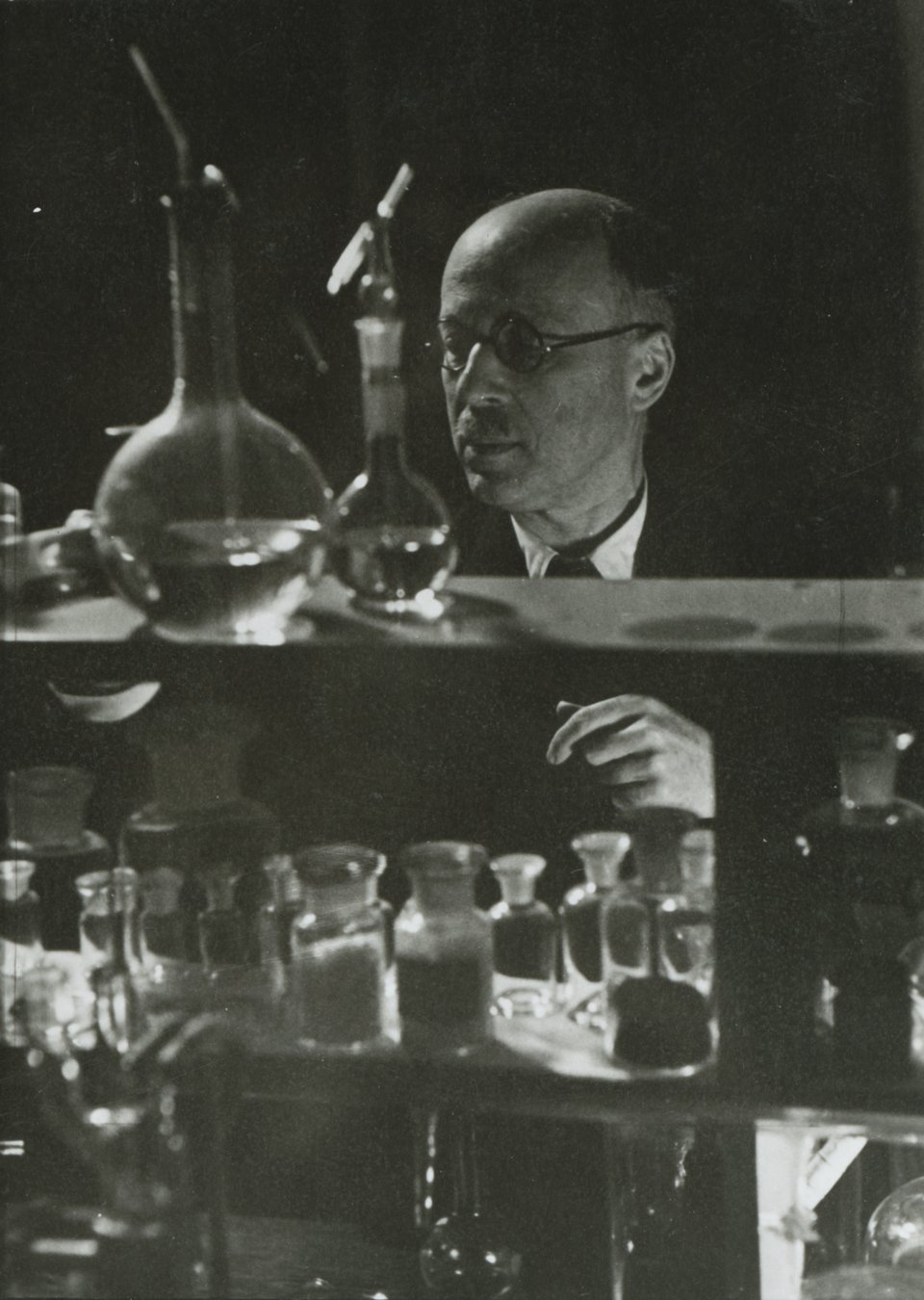
FIG. 1 · C. 1939 · PUBLIC DOMAIN MARK
Safety at a Glance
Modern testosterone products
The wrong target
By the start of 1935, chemists believed they already had the male hormone. Four years earlier, in 1931, the young German chemist Adolf Butenandt had isolated a crystalline male hormone from men's urine and named it androsterone P18, P19. In 1934, Leopold Ruzicka's laboratory in Zurich made the same compound from a cholesterol derivative P6. That October, a Nature commentary on Ruzicka's work still referred to Butenandt as the man "who first isolated and characterised the testicular hormone" P7. The male hormone had been isolated, its structure worked out, and it had even been rebuilt at the laboratory bench. Or so it seemed.
Androsterone was a real androgen: it produced male-hormone effects in test animals. But it would turn out to be weaker than, and different from, the hormone the testes actually secrete P8, P9, P12, P18.
Then, in February 1935, a short letter in Nature from Ernst Laqueur's group in Amsterdam questioned the assumption that it was the male hormone. Elisabeth Dingemanse, János Freud and Laqueur reported that hormone extracts from urine and hormone extracts from testes did not behave the same way when given to castrated rats P8. Something in the testis was not androsterone.
Within months, the Amsterdam team had crystals of that something. They called it testosterone. Later in 1935, two rival research groups, one in Danzig (today's Gdańsk) and one in Zurich, showed how to make it from a sterol starting material. Four years later, two of the chemists involved shared a Nobel Prize. Laqueur, whose group is generally credited with isolating the hormone, was not one of them S14.
Telling the story of 1935 accurately means separating isolation, naming, structure and synthesis, which popular accounts fold into a single "discovery."
Before 1935: glands, grafts and hope
The idea that the testes send some influence through the body is old. Its experimental history is usually traced to 1849. That year the Göttingen physiologist Arnold Adolph Berthold castrated roosters and watched their combs shrink and their crowing and fighting fade. When he grafted testes back into the birds, at sites where nerves could not have reconnected, the male traits returned P1. Berthold concluded that the testes acted through the blood, an early landmark of endocrinology, the study of internal secretions.
Forty years later the idea turned theatrical. In 1889 the eminent French physiologist Charles-Édouard Brown-Séquard, then 72, reported in The Lancet that he had injected himself with extracts of dog and guinea-pig testes and felt rejuvenated P2, S10. The report was largely responsible, as the 2002 study puts it, for the rise of "organotherapy," treatment with animal-gland extracts, across Europe and North America S10.
It almost certainly did not work as he believed. A 2002 study that prepared extracts from five dog testes following his method found testosterone concentrations "four orders of magnitude less than that required for a biological effect," and its authors concluded that his response was a placebo effect S10. A 2019 review in the European Journal of Endocrinology says the organotherapy and testis transplantation of that era "had only placebo effects" S1.
The early twentieth century still saw a fashion for sex-gland rejuvenation. The Viennese physiologist Eugen Steinach's "Steinach operation" tied off the vas deferens, and thousands of men underwent it; others sought grafts of animal glands S6, S13. Reviewing Chandak Sengoopta's history of the period, the medical historian W. F. Bynum judged endocrinology's origins "slightly dubious" because of the therapeutic claims some early advocates made S13. Those hopes were waiting when the real hormone arrived.
Measurable science came first from Chicago. In 1927 Lemuel McGee, working in the biochemist Fred Koch's laboratory, reported an extract from the fatty fraction of bull testes that made the shrunken combs of capons (castrated roosters) grow again P3. The capon-comb test gave researchers a yardstick for potency as they purified extracts. Koch, McGee and Thomas Gallagher later patented their extraction process P4. Male hormones were becoming commercial property as well as scientific objects.
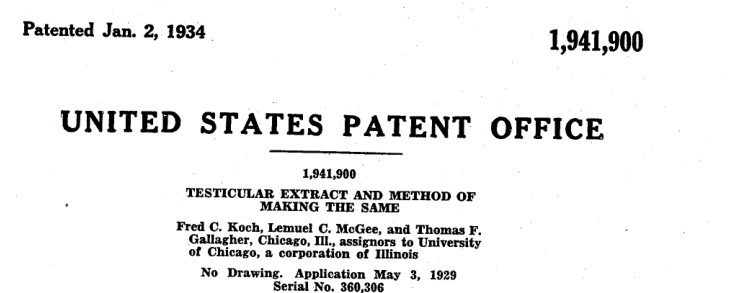
FIG. 2 · 1934-01-02 · PUBLIC DOMAIN (U.S. PATENT TEXT)
The people and the race
Three laboratories, each tied to industry, shaped what happened next.
Amsterdam. Ernst Laqueur (1880–1947), a pharmacologist from Breslau who held a chair at the University of Amsterdam, co-founded the Dutch pharmaceutical company Organon in 1923 together with Saal van Zwanenberg's meat-packing firm S14, R1. Peter Jan Knegtmans's archival biography of Laqueur, as summarised in a 2016 scholarly review, shows that Organon's funding and material support let his laboratory work at the international forefront, and that the laboratory served the company's research as well as his own. Laqueur's team included the chemist Elisabeth Dingemanse, the pharmacologist János Freud and Károly Gyula David.
Danzig and Berlin. Adolf Butenandt (1903–1995) trained in Göttingen under Adolf Windaus and held the chair of organic chemistry in Danzig until 1936 P19. He worked closely with the Berlin pharmaceutical firm Schering. The historian Jean-Paul Gaudillière describes a steady "circulation of materials, information and money" between the firm and Butenandt's research, with patents shaping the work S7. Between 1936 and 1940 Schering paid Butenandt 160,000 Reichsmarks, partly for a hormone patent S9.
Zurich. Leopold Ruzicka (1887–1976) was born in Vukovar, in today's Croatia. He took Swiss citizenship in 1917 and returned to the ETH Zurich as a professor in 1929 P20. In 1930 the Basel firm Ciba renewed its contact with his laboratory. The Nobel Foundation's biography says the association led within a few years to "scientifically as well as industrially important successes in the field of the male sex hormones" P20.
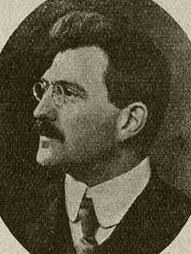
FIG. 3 · 1920 · PUBLIC DOMAIN
Spring 1935: isolation and a name
The February Nature letter set out the problem P8. The full answer appeared a few months later, in a short paper in the German Zeitschrift für physiologische Chemie by David, Dingemanse, Freud and Laqueur P9. Its title, translated, makes its claim plain: on crystalline male hormone from testes (testosterone), more active than androsterone prepared from urine or from cholesterol.
The name joined testis to the chemists' naming conventions for steroids [R6]. The paper is usually credited to Laqueur, but it carried four authors. Merriam-Webster dates the first known use of the word "testosterone" to 1935 and attributes it to the group [R6].
Three things happened in that paper. A hormone was isolated from biological tissue (bull testes) in crystalline form P9, P12. It was named. And it was shown to be distinct from, and more potent than, androsterone. The Amsterdam group also worked out its chemical constitution by analysis, in a short report in Acta Brevia Neerlandica the same year P12, P13. What the paper did not do was make testosterone without testes. Supply still depended on animal organs, and on Organon.
Late summer 1935: two syntheses
Testosterone's molecular structure turned out to be close to androsterone's and to another urinary steroid, dehydroandrosterone. Butenandt had identified dehydroandrosterone in urine in 1934 P5. Chemists could also obtain it from cholesterol. That closeness made the next step fast. The Nobel Foundation's published presentation of the 1939 prize puts it plainly: "The close relationship of testosterone to androsterone made it comparatively easy to clarify its chemical composition" P18.
In 1935 Butenandt and his student Günter Hanisch published a preliminary communication in the Berichte der Deutschen Chemischen Gesellschaft describing the conversion of dehydroandrosterone into testosterone, "a route to the preparation of testosterone from cholesterol" (a translation of the paper's subtitle) P10, P12. Ruzicka and Albert Wettstein published "On the artificial preparation of the testicular hormone testosterone" (title translated) in Helvetica Chimica Acta P11. Butenandt and Hanisch followed with a fuller paper in the Zeitschrift für physiologische Chemie P10b. The Berichte issue carrying the preliminary note is dated 11 September 1935 P10. Hanisch's dissertation, written in Butenandt's laboratory, says Ruzicka and Wettstein prepared the compound "gleichzeitig" (at the same time). It also reports that the synthetic and natural testosterone proved identical, with about six times androsterone's activity in the capon-comb test and ten times in a seminal-vesicle test P12. In March 1936 the London researcher V. Korenchevsky wrote that the hormone had been "prepared artificially by Ruzicka and Wettstein and also by Butenandt and Hanisch," and tested a sample of Ruzicka's hormone supplied by Ciba P13. The Nobel Foundation's presentation later said the two had done so "in the same way but independently of each other" P18.
Two qualifications matter. First, neither was a total synthesis from simple chemicals. Both started from a steroid skeleton made by living things. In 1934 the Nature commentary on Ruzicka's androsterone work had already called it "unfortunate that this conversion of cholesterol into androsterone should be described by the investigators as a 'synthesis'" P7. "Partial synthesis" is the more accurate term. Second, the 1935 routes were laboratory demonstrations, not a production process. They showed that testosterone could in principle be made from sterols, an abundant raw material, rather than only extracted from animal testes. That opened a path toward scale-up; the Nobel presentation credits Ruzicka's preparative methods with making "the technical synthesis" of androsterone and testosterone possible P18. But large-scale manufacture, usable formulations, pricing and availability were all worked out in the following years. Schering stood behind Butenandt and Ciba behind Ruzicka S7, P20. The historian Jean-Paul Gaudillière's study of Butenandt and Schering carries a telling title: Better prepared than synthesized S7.
What actually changed
1935 gave medicine the principal testicular hormone as a defined molecule. A purified male hormone already existed: androsterone had been crystallised and characterised from urine since 1931. But extracts of the testes themselves were still variable mixtures assayed on capon combs. After 1935, the hormone the testes actually secrete was a single compound of known structure that chemists could prepare from sterols. Reliable production standards, doses and formulations were the work of the following years.
The practical consequences followed quickly but not instantly. Testosterone taken by mouth is largely broken down by the liver before it can act S1. Ciba chemists, including Wettstein, showed in 1936 that attaching ester groups to male hormones changed and prolonged their activity P14. By 1937 an injectable ester, testosterone propionate, was being supplied by the Schering company to clinical researchers in the United States P16. When it first went on general sale is not established by the sources checked for this article.
Clinical reports followed. In 1937 the American researcher J. B. Hamilton described treating "sexual underdevelopment" with synthetic male hormone P15. The same year, Allan T. Kenyon and colleagues at the University of Chicago reported giving testosterone propionate, supplied by the Schering company, to men with eunuchoidism, a condition of testicular deficiency P16. Their patients gained weight and excreted less nitrogen, a sign that the body was storing protein. But the Chicago team calculated that the stored protein and its accompanying water accounted for no more than a third to a half of the weight gained, and that sodium retention, with its water, explained the rest P16. They compared the nitrogen effect to one Charles Kochakian had reported in castrated dogs in Rochester. Kochakian's 1935 experiment had used a male-hormone extract prepared from urine, not pure testosterone, and he wrote that he could not yet say whether the hormone acted directly P22. These are the roots of the idea of an "anabolic," or tissue-building, steroid.
What did not change, and what remains uncertain
1935 did not make testosterone widely available. It made it knowable and reproducible. Practical treatment took much longer: Nieschlag and Nieschlag describe more than 85 years of work to develop preparations that produce physiological levels in the body S1.
Some details remain unsettled in the sources consulted:
- Exact dates and order. The Amsterdam paper is usually dated to May 1935, and the two synthesis papers to late August. Only the Berichte issue date (11 September 1935) has been confirmed. The Amsterdam group also published short notes in Acta Brevia Neerlandica in 1935, which may have announced the isolation first P9, P10, P11, P13.
- Quantities. Popular accounts give conflicting figures for the urine and testes processed; this article does not repeat them.
- Priority. No reliable source examined here declares a winner between Butenandt and Ruzicka. The Nobel Foundation treated their work as independent and simultaneous P18.
Recognition and its distortions
The 1939 Nobel Prize in Chemistry went to Butenandt, "for his work on sex hormones," and to Ruzicka, "for his work on polymethylenes and higher terpenes" P18. Ruzicka's official motivation does not mention testosterone at all, though the Nobel presentation states that "the merit of the chemical exploration of the testicular, or androgenic, hormones falls to Butenandt and Ruzicka in common" P18.
Laqueur was not honoured. The prize, awarded four years later for each laureate's wider body of work, is not a ranking of contributions to 1935.
Politics shaped recognition too. The Nazi authorities compelled Butenandt to decline the prize. He received the gold medal and diploma in 1949 P18. Butenandt had joined the Nazi Party on 1 May 1936 S9. Historians working for a presidential commission of the Max Planck Society after his death have examined his wartime ties to research connected with the regime S8, S9. Laqueur, who was of Jewish descent, was dismissed from his Amsterdam professorship under the German occupation and barred from his own laboratory; he and his wife narrowly escaped deportation S14. He was reinstated after the war and died in 1947 [R1, S14].
Masculinity, measured
The website's working headline speaks of scientists who "learned to manufacture masculinity." The phrase captures something real about how testosterone was received. Laboratories called these "male sex hormones," companies sold them, and the rejuvenation culture of earlier decades stood ready to read them as bottled vigour S13.
The evidence also complicates that phrase. The Nobel Foundation's own account noted that the "male" hormone androsterone differs from the "female" hormone oestrone "only in the additional content of 1 methyl group and 5 hydrogen atoms" P18. Gaudillière shows that the uses of these "natural" drugs were worked out by Schering together with "a selected group of clinicians" while the company built its hormone market S7. The chemists of 1935 manufactured a molecule. Whether that molecule is masculinity was a cultural claim made around them, and the chemistry itself gave reasons for caution.
The early patients matter here too. Among the early published clinical recipients were small numbers of men treated for testicular insufficiency P15, P16. For them it was a treatment, not an enhancement. Their experience is the baseline against which every later use should be compared.
From treatment to enhancement
The move from therapy to athletic performance came later and is less well documented. Popular accounts tie it to 1950s Cold War weightlifting, but the most specific stories rest on anecdote. Historians of sport document that the American physician John Ziegler, who did research for Ciba, experimented with testosterone on weightlifters from the mid-1950s; that Ciba released methandrostenolone (Dianabol) in 1958; and that lifters at the York Barbell Club were using Dianabol by the early 1960s S12, S15. The International Olympic Committee added anabolic steroids to its list of banned substances in 1975, and they were first detected in Olympic testing at Montreal in 1976 S16, P25. Testosterone itself was not among the substances tested for at those Games S16. In 1990 the Anabolic Steroids Control Act placed anabolic steroids in Schedule III of the US Controlled Substances Act, with testosterone named in its list P24.
Today's online fights over who is "natty," internet slang for a drug-free (natural) lifter [R10], are a distant echo of 1935. The underlying question is older: where does treatment end and enhancement begin, and can anyone tell from the outside? The chemists of 1935 did not answer it, but they made it possible to ask it about a specific, measurable molecule.
Why 1935 still matters
The lasting change of 1935 was not a cure, a product or a new kind of man. It was definition. The testes' own active hormone became a named compound with a known structure that could be made from sterols. Every later chapter of the testosterone story, from hormone replacement and anabolic steroids to doping tests and the "natty" debate, begins with the molecule pinned down that year in Amsterdam, Danzig and Zurich.
Substance Status & Safety
United States, federal; sources checked October 30, 2026. This is historical and informational, not personalized treatment or dosing advice. The current product example is AndroGel 1.62%; it is not interchangeable with a 1930s gland extract, testosterone propionate, an oral androgen or another modern preparation.
Present-day status and clinical use
Testosterone is listed among Schedule III anabolic steroids in 21 CFR §1308.13(f), including the specific testosterone entry at (f)(84) TS3. Controlled scheduling is separate from drug approval. FDA-approved testosterone products are medicines for particular medical indications, not an OTC supplement category or a regulatory category called “research chemical.”
The reviewed AndroGel 1.62% label describes prescription replacement therapy in adult males with specified conditions causing deficient or absent endogenous testosterone. It distinguishes primary testicular failure from deficiencies involving pituitary or hypothalamic signaling. Safety and effectiveness for age-related low testosterone and for males under 18 have not been established in that label TS2 §1. This is one product's labeling; it is not a complete account of every testosterone formulation or clinical use. Off-label indications are not evaluated in this historical essay, and no additional use is being represented as FDA-approved.
The 1935 milestone concerns isolation, naming and laboratory partial synthesis. It predates the modern product labels and scheduling described here. The historical approval and availability of each early preparation have not been reconstructed in this update; the narrative's documented uncertainty about early commercial availability remains.
What changed in FDA's warnings
In February 2025, FDA announced labeling changes after reviewing the TRAVERSE trial and required blood-pressure studies. The agency removed boxed-warning language about increased adverse cardiovascular outcomes while retaining limitations concerning age-related hypogonadism. It also required new or updated warnings about increased blood pressure TS1.
Those are distinct findings. The FDA action is not a declaration that testosterone is risk-free, nor evidence that nonmedical high-dose use or combinations with other anabolic steroids have the same safety profile as treatment studied for hypogonadism. The reviewed AndroGel label still warns about blood pressure, venous blood clots, elevated red-cell counts and abuse-related harms TS2 §§5.2–5.6, 9.2.
Product-specific harms and situations requiring care
The AndroGel 1.62% label describes reports of deep-vein thrombosis and pulmonary embolism. It directs urgent evaluation for concerning symptoms such as a painful swollen leg, shortness of breath or chest pain TS2 §§5.3, 17.3. Increased red-cell counts and blood pressure require clinical monitoring TS2 §§5.2, 5.5. Large doses of external androgens can suppress sperm production, which matters for fertility TS2 §5.8.
Skin transfer is a special risk of topical gels. The product's boxed warning describes hormonal effects in children following unintended secondary exposure. Its labeling also warns of fetal harm during pregnancy and contraindicates use in pregnant women and in men with breast cancer or known or suspected prostate cancer TS2 boxed warning; §§4, 5.1. These warnings must not be copied indiscriminately onto every historical or modern formulation.
The label identifies interactions requiring monitoring: changes in glucose control with insulin, changes in the effects of oral anticoagulants, and increased fluid retention with ACTH or corticosteroids, particularly with underlying heart, kidney or liver disease TS2 §§7.1–7.3. This is a selected safety summary, not a complete contraindication or interaction checklist.
High-dose abuse, often involving several anabolic steroids, has been associated with serious cardiovascular, liver and psychiatric events and with dependence or withdrawal symptoms. The label cautions that voluntary reports, uncertain population size and use of other agents limit estimates of frequency and causal attribution TS2 §§9.2–9.3. Do not equate those reports with the risks of every properly prescribed product, or assume prescribed use eliminates risk.
Overdose and limits of the evidence
The reviewed label describes a published acute-overdose case involving an injectable testosterone product and a cerebrovascular accident; it reports no overdoses in the AndroGel 1.62% clinical trial TS2 §10. An isolated case cannot establish a universal fatal dose, and absence of trial overdoses does not establish safety in overdose.
No reliable human lethal-dose threshold is established in the sources reviewed. No animal LD50 is used here as a substitute, and no practical dose limit can be inferred from this history.
For suspected poisoning, call U.S. Poison Control at 1-800-222-1222. For collapse, seizure, trouble breathing or inability to awaken, call 911. Seek urgent medical evaluation for the blood-clot warning signs described above. Product-specific decisions require the current prescribing information and an appropriately qualified clinician TS2 §17.3; TS4.
Sources & Further Reading
Full citations and verification status are in SOURCES.md.
- Dingemanse, Freud & Laqueur, Nature 135:184 (1935) [P8]
- David, Dingemanse, Freud & Laqueur, Z. physiol. Chem. 233:281–283 (1935) [P9]
- Butenandt & Hanisch, Ber. dtsch. chem. Ges. 68:1859–1862 (1935) [P10]
- Hanisch, Über die Synthese des Testosterons (dissertation, Danzig, 1937) [P12]
- Kenyon et al., Proc. Soc. Exp. Biol. Med. 37:683–685 (1937) [P16]
- Fair, "Isometrics or Steroids?" J. Sport Hist. 20 (1993) [S12]; Hunt, "Sport, Drugs, and the Cold War," Olympika 16 (2007) [S16]
- Ruzicka & Wettstein, Helv. Chim. Acta 18:1264–1275 (1935) [P11]
- Nobel Foundation, Chemistry 1939, prize summary and presentation text (from Nobel Lectures, Chemistry 1922–1941) [P18]
- Nieschlag & Nieschlag, Eur. J. Endocrinol. 180:R201–R212 (2019) [S1]
- Gaudillière, "Better prepared than synthesized," Stud. Hist. Phil. Biol. & Biomed. Sci. 36 (2005) [S7]
- Knegtmans, Geld, ijdelheid en hormonen: Ernst Laqueur (2014), reviewed in BMGN 131 (2016) [S14]
- Further reading (not used as evidence in this draft): Oudshoorn, Beyond the Natural Body (1994); Sengoopta, The Most Secret Quintessence of Life (2006)
- Hoberman, Testosterone Dreams (2005) [S4]
Current safety and regulatory sources — checked October 30, 2026
- [TS1] FDA, “FDA issues class-wide labeling changes for testosterone products,” February 28, 2025. Official notice. The notice was read directly; it distinguishes cardiovascular-outcome findings from increased blood pressure.
- [TS2] DailyMed / Ascend Therapeutics U.S., LLC, “AndroGel 1.62% (testosterone) gel.” Official label. DailyMed publication November 17, 2025; SPL effective date October 22, 2025. Relevant label sections read directly: boxed warning, §§1, 4, 5.1–5.6, 5.8–5.9, 7.1–7.3, 9.1–9.3, 10, 12.1 and 17.3–17.4. This is the 1.62% product, not the separate 1% label.
- [TS3] eCFR, 21 CFR §1308.13(f), Schedule III anabolic steroids. Testosterone entry (f)(84); relevant current text read directly.
- [TS4] National Capital Poison Center, Poison Control. Emergency telephone and severe-symptom guidance read directly.
Historical-source access note: the three original 1935 papers [P9, P10, P11] remain unread in full; their bibliographic records and contemporary supporting accounts were checked during the earlier research. Their availability may require institutional access. The modern safety update does not close the historical verification gaps tracked in issue #2.
Additional cited source IDs
Citations below are copied unchanged from the article source ledger; access and verification limits remain in SOURCES.md. No historical source has been newly read for this anchor update.
- [P1] — Berthold, A. A. (1849). "Transplantation der Hoden." Archiv für Anatomie, Physiologie und wissenschaftliche Medicin 1849: 42–46.
- [P10b] — Butenandt & Hanisch, "Über Testosteron. Umwandlung des Dehydro-androsterons in Androstendiol und Testosteron; ein Weg zur Darstellung des Testosterons aus Cholesterin," Z. physiol. Chem. 237:89–97 (1935), DOI 10.1515/bchm2.1935.237.1-3.89
- [P13] — Korenchevsky, V. (1936). "Biological Properties of Testosterone." Nature 137: 494 (21 Mar 1936). DOI 10.1038/137494a0
- [P14] — Miescher, K., Wettstein, A., Tschopp, E. (1936). "The activation of the male sex hormones. I." Biochem. J. 30(11): 1970–1976. DOI 10.1042/bj0301970. PMC1263291, PMID 16746249
- [P15] — Hamilton, J. B. (1937). "Treatment of sexual underdevelopment with synthetic male hormone substance." Endocrinology 21: 649–654.
- [P19] — Nobel Foundation. Adolf Butenandt – Biographical
- [P2] — Brown-Séquard, C.-E. (1889). "Note on the effects produced on man by subcutaneous injections of a liquid obtained from the testicles of animals." The Lancet 134(3438): 105–107.
- [P20] — Nobel Foundation. Leopold Ruzicka – Biographical
- [P22] — Kochakian, C. D. (introduced by J. R. Murlin) (1935). "Effect of Male Hormone on Protein Metabolism of Castrate Dogs." Proc. Soc. Exp. Biol. Med. 32: 1064–1065. DOI 10.3181/00379727-32-7969P
- [P24] — Crime Control Act of 1990, Pub. L. 101-647 (29 Nov 1990), Title XIX "Anabolic Steroids Control Act of 1990", 104 Stat. 4851–4854. https://www.govinfo.gov/content/pkg/STATUTE-104/pdf/STATUTE-104-Pg4789.pdf
- [P25] — de Mérode, Prince A. (1979). "Doping tests at the Olympic Games in 1976." Olympic Review no. 135: 10–16. LA84 Digital Library, published with IOC permission
- [P3] — McGee, L. C. (1927). "The effect of the injection of a lipoid fraction of bull testicle in capons." Proc. Inst. Med. Chicago 6: 242–254.
- [P4] — Koch, McGee, Gallagher. US Patent 1,941,900 (1934; filed 1929), assigned to the University of Chicago.
- [P5] — Butenandt, A. & Dannenbaum, H. (1934). Z. physiol. Chem. 229: 192.
- [P6] — Ruzicka, L., Goldberg, M. W., Meyer, J., Brüngger, H., Eichenberger, E. (1934). Helv. Chim. Acta 17: 1395–1406.
- [P7] — [Unsigned] "The Male Sex Hormone." Nature 134: 563 (13 Oct 1934). DOI 10.1038/134563b0
- [S10] — Cussons, A. J., Walsh, J. P., Bhagat, C. I., Fletcher, S. J. (2002). "Brown-Séquard revisited: a lesson from history on the placebo effect of androgen treatment." Med. J. Aust. 177(11–12): 678–679. DOI 10.5694/j.1326-5377.2002.tb05014.x
- [S13] — Bynum, W. F. (2006). "Dig for gland of hope and glory" [review of Sengoopta, S6]. Times Higher Education, 30 June 2006. https://www.timeshighereducation.com/books/dig-for-gland-of-hope-and-glory/204086.article
- [S15] — Yesalis, C. E. & Bahrke, M. S. (2002). "History of Doping in Sport." International Sports Studies 24(1): 42–76. LA84 Digital Library (published with permission)
- [S6] — Sengoopta, C. (2006). The Most Secret Quintessence of Life. University of Chicago Press
- [S8] — Schieder & Trunk (eds.) (2004). Adolf Butenandt und die Kaiser-Wilhelm-Gesellschaft. Wallstein
- [S9] — Proctor, R. N. (2000). Adolf Butenandt (1903–1995): Nobelpreisträger, Nationalsozialist und MPG-Präsident. Ein erster Blick in den Nachlass. Ergebnisse 2, Forschungsprogramm "Geschichte der KWG im Nationalsozialismus" (Präsidentenkommission der MPG). https://www.mpiwg-berlin.mpg.de/KWG/Ergebnisse/Ergebnisse2.pdf
Explore the connections
- EVENT The Pill That Changed Reproductive Freedom
- EVENT The Birth of Nootropics
- PERSON Ernst Laqueur
- PERSON Adolf Butenandt
- PERSON Leopold Ruzicka
- TOPIC Hormones
- TOPIC Anabolic Steroids
- TOPIC Testosterone Replacement Therapy
- TOPIC The Natty Debate