EVENT / 1960 / REPRODUCTION
The Pill That Changed Reproductive Freedom
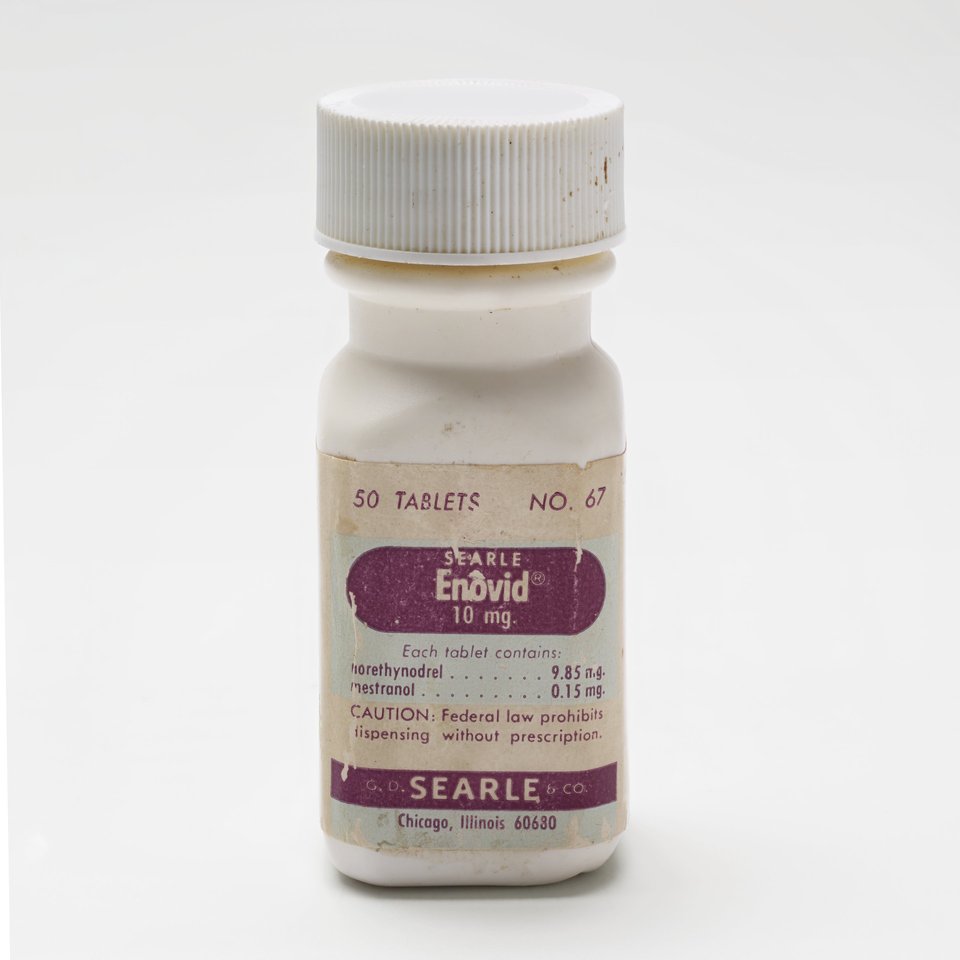
FIG. 1 · 2018 · CC BY 4.0
Safety at a Glance
The birth-control pill
U.S. legal / access status
- Prescription only · Ashlyna [MED-H01]
A pill, approved, and out of reach
In May 1960, the U.S. Food and Drug Administration approved the sale of a pill that women could take to prevent pregnancy PBS-H01, printed p. 1. The drug was Enovid, the first oral contraceptive cleared for that purpose in the United States FDA-H01; ECON-H01, p. 733, Table 1.
Nine years later, an 18-year-old who wanted that pill could still face a legal maze. By Claudia Goldin and Lawrence Katz's count, in 1969 there were only nine states in which an 18-year-old could obtain it without legal impediment ECON-H01, pp. 739–740, Table 2. Federal approval had made the pill legal to prescribe. Whether a particular woman could actually get it depended on her age, her marital status and the state she lived in.
That gap is the real story of 1960. It is a story about a scientific idea that let women control the timing of pregnancy as never before, about the women in Puerto Rico on whom the drug was tested, about a regulatory system on the verge of change, and about the slow, uneven way a medical product became part of ordinary life.
How a pill prevents pregnancy
Pregnancy depends on ovulation, the release of an egg from an ovary during the menstrual cycle. Without an egg, there is nothing to fertilize. Today's prescribing information for combined oral contraceptives (pills containing two kinds of hormone, an estrogen and a progestin) explains that they prevent pregnancy primarily by suppressing ovulation MED-H01, printed p. 3, §12.1.
That one idea explains why a pill was such a departure. The methods already available, such as condoms and diaphragms FDA-H01, were barriers used at the time of sex. A pill instead worked on the body's own cycle, in advance. For a woman who could get a prescription, that meant planning for pregnancy ahead of time rather than in the moment.
The modern description comes from a 2026 label for a present-day pill, not from Enovid's original prescribing information, and that modern formulation should not be confused with the first pill. But the basic promise, a reliable way to choose when to become pregnant, is what made the pill historically important.
Why timing mattered
Contraception was not new in 1960. What was new was a more dependable oral method that women could manage themselves. In their 2002 study of the pill's economic effects, Goldin and Katz argue that a dependable way to delay pregnancy changed the calculation for women considering long, demanding training, such as law or medicine. Years of study make more sense if an unplanned pregnancy is less likely to interrupt them ECON-H01, pp. 730–732. Their argument is about planning and timing, not simply about sex.
The law shaped who could make that plan. Whether a young unmarried woman could obtain the pill without a parent's consent depended in part on her state's age-of-majority rules and related statutes ECON-H01, pp. 739–740. The new technology arrived into a legal landscape that had not been built with it in mind.
From a treatment to a contraceptive
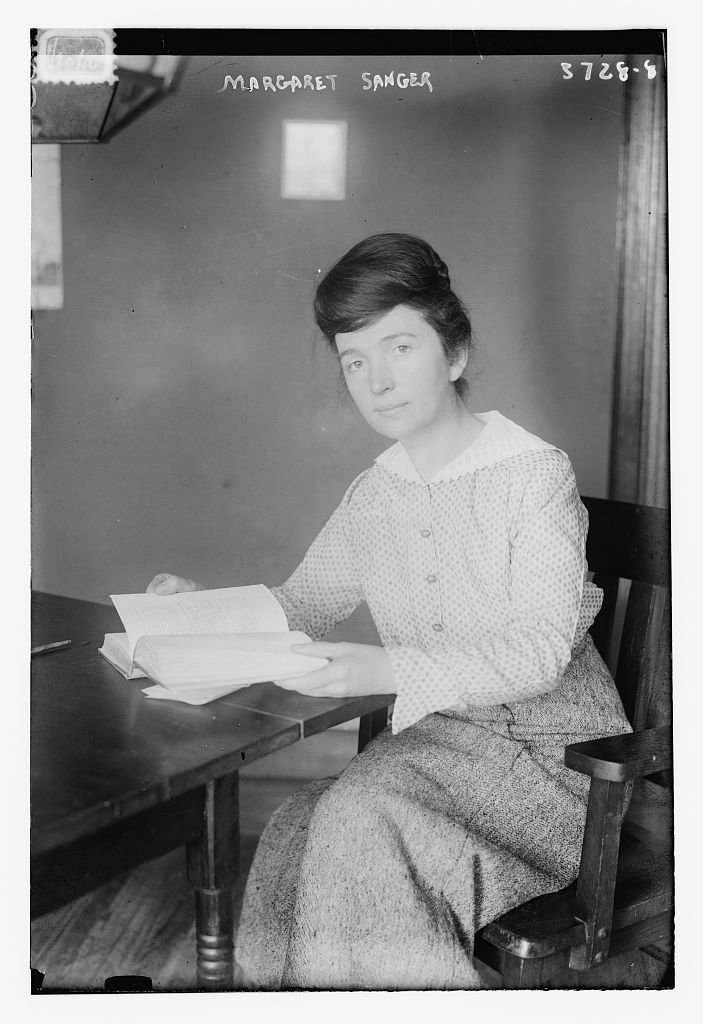
FIG. 2 · 1916-01-20 · NO KNOWN RESTRICTIONS ON PUBLICATION
No single inventor made the pill. Goldin and Katz's historical timeline records a chain of contributions. In 1950, Margaret Sanger persuaded McCormick, an heiress, to fund research on the pill. In 1953, McCormick promised Gregory Pincus, a researcher and consultant to the drug company Searle, that she would fund his birth-control-pill project to completion. In 1954, John Rock and Pincus carried out early tests of two compounds, norethynodrel and norethindrone, aimed at preventing ovulation, the same principle described above ECON-H01, p. 733, Table 1. That timeline is a later summary drawn from earlier histories, not a firsthand record. Pincus would also lead the trials in Puerto Rico PBS-H02, printed p. 2. The resulting pill then had to make its way through the federal drug-approval system.
The pill's path through the FDA has an unusual shape. According to Suzanne White Junod, writing as the agency's historian in 1998, the drug was first submitted in 1957, not as a contraceptive but as a treatment for menstrual disorders and infertility, even though it had been developed as an oral contraceptive. Only in 1960 was the same drug submitted for approval specifically as a contraceptive FDA-H01. Goldin and Katz's historical timeline records the matching sequence of approvals: 1957 for medical disorders, 1960 for contraception ECON-H01, p. 733, Table 1.
The change of purpose changed the safety question. Once the drug was proposed as a contraceptive, Junod explains, regulators' concern shifted from ordinary side effects to the complications that might follow when a healthy woman took a drug for long periods to prevent pregnancy FDA-H01. Treating an illness for a limited time is one kind of risk. Asking large numbers of healthy women to take a medicine for years is another, and that difference runs through the rest of the pill's history.
In Junod's account, safety and effectiveness could not be separated. Pregnancy and childbirth were themselves medically risky, so a contraceptive that worked well could be judged safer than one that did not. Had the pill been less effective than condoms or diaphragms, she writes, its safety would have been hard to establish FDA-H01. The FDA also raised early concerns about whether the drug could cause cancer, concerns that obstetric experts at the time did not share FDA-H01.
Timing mattered here too. Enovid was approved before the thalidomide disaster and before Congress passed the 1962 Drug Amendments. Junod argues that after thalidomide, any drug with such widespread potential use by women of childbearing age would have faced a far more cautious regulatory environment FDA-H01. That is her judgment about a road not taken, but it is a reminder that the 1960 approval happened under rules that were about to change.
The Puerto Rico trials
Before approval, the pill was tested on women in Puerto Rico. How to judge those trials is still argued over.
PBS's American Experience places them in their era. In the 1950s, after antibiotics and other "wonder drugs," public trust in medical science was high, and human drug testing was far less tightly regulated than it is today. PBS states that the Puerto Rico trials conformed to the standards of their time, while noting that some research standards then were ethically wrong PBS-H02, printed p. 1.
Critics have gone further. In the years after the trials, according to PBS, they denounced the testing as unethical and imperialistic, and questioned testing an experimental drug on poor, undereducated Puerto Rican women who had been given little information about the experimental nature of the trials PBS-H02, printed p. 2.
The record also contains a complication. When popular magazines published accounts of the trials, American couples wrote to Pincus asking to take part; one California man objected that the trials were not being run in the United States PBS-H02, printed p. 2. That shows demand among some Americans. It says nothing about whether the women actually enrolled in Puerto Rico understood what they were agreeing to.
The FDA's historian takes a different view of the agency's role. Junod explicitly rejects the charge that women "served as guinea pigs" in a massive experiment, arguing that the regulatory record does not support it FDA-H01. Hers is an institutional account of the agency's own history. What individual participants were told, and how they experienced the trials, remains the unresolved heart of the debate.
Approved is not the same as available
Among married women, the pill spread quickly. Goldin and Katz report that by 1965, 41 percent of married women under 30 who used contraception were using the pill ECON-H01, p. 732. That counts married women already using some form of contraception, not all women, but it shows how fast the method was adopted where it was accessible.
Young unmarried women were a different case. Their uptake lagged, and much of the reason was legal ECON-H01, pp. 732–735. During the late 1960s and early 1970s, states lowered the age of majority, adopted rules letting "mature minors" consent to their own medical care, and passed family-planning statutes. The nine states of 1969 in which an 18-year-old could obtain the pill without legal impediment had become 30 by 1971 ECON-H01, pp. 739–740, Table 2. Those are the authors' classifications of the law at the time, not a description of the law today.
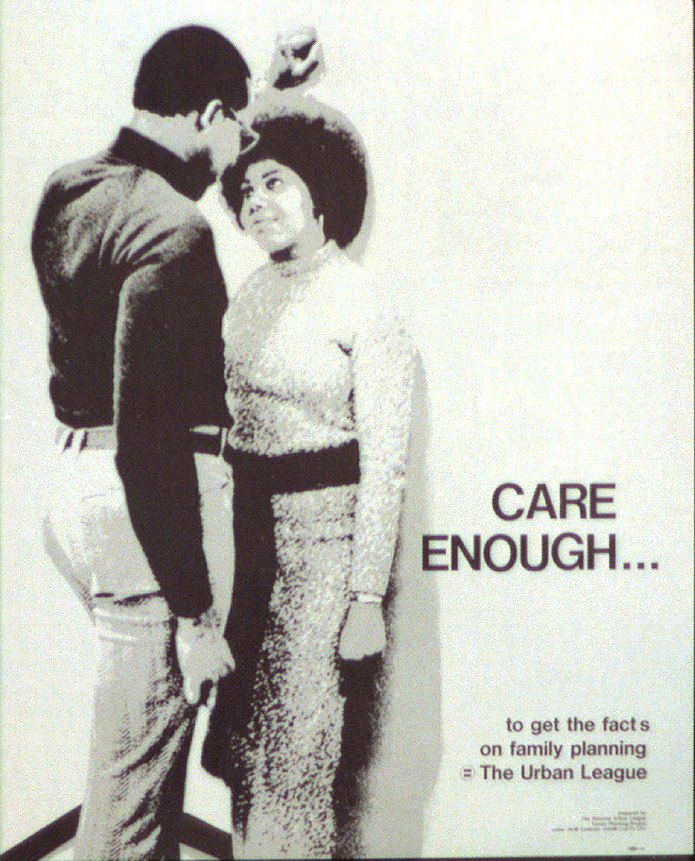
FIG. 3 · 1965–1980 · NO KNOWN RESTRICTIONS ON PUBLICATION
Opportunity, measured carefully
Did access to the pill change women's lives? Goldin and Katz offer one of the most careful attempts to answer with data. Their method compares states, and women born in different years, according to how early young unmarried women could legally obtain the pill ECON-H01, pp. 730–732, 739.
The backdrop is striking. Women made up 10 percent of first-year law students in 1970 and 36 percent by 1980 ECON-H01, p. 731. That trend had many causes, and the authors do not claim the pill explains it alone.
What their models suggest is more specific. Under the specifications they report, variation in pill access for young women accounts for roughly 24 to 37 percent of the observed decline in the share of college-graduate women who married before age 23 ECON-H01, p. 758; Table 4, pp. 756–757. That is an estimate from particular statistical models about a particular group, not a claim that the pill caused a quarter or more of all change in American marriage.
They also find positive, statistically significant links between earlier access and later employment in professions that require long training, such as law and medicine, while their results for professional employment more broadly hold up less consistently ECON-H01, Table 5, pp. 760–761; discussion pp. 762–763. They weigh other explanations, including changes in abortion law, the women's movement and anti-discrimination law, and explicitly caution against a single-cause story of social change ECON-H01, pp. 764–767.
Their conclusion is measured: earlier access to oral contraception appears to have helped women postpone marriage and invest in careers requiring lengthy education, alongside many other forces ECON-H01, p. 767. It is not a finding that the pill alone produced the sexual revolution or closed the wage gap.
The safety reckoning
The pill's greatest hazard was not the one regulators first worried about. Junod writes that its chief danger was thromboembolism: obstructions of blood vessels leading to the brain, heart or lungs, occasionally fatal. That danger was not anticipated at the time of approval, and it took almost a decade to establish the statistical link between the condition and oral contraceptives FDA-H01.
Public understanding shifted over the same years. After the 1962 drug amendments, PBS recounts, reports of the pill's side effects appeared in medical journals and spread through the popular press and women's magazines PBS-H02, printed p. 2. In 1969, Barbara Seaman's book The Doctor's Case Against the Pill led to Senate hearings in the winter of 1970, where women's health activists protested that their doctors had not fully explained the pill's risks PBS-H02, printed p. 3. Later that year, according to PBS, the FDA required drug companies to include a patient information insert with each prescription, so that women could make informed decisions PBS-H02, printed p. 3.
PBS's verdict is that the pill trials met the FDA standards of the 1950s but not those of the 1960s, and that by 1970 informed consent had become a cornerstone of medical ethics PBS-H02, printed p. 3.
The pill today, narrowly
Enovid's original formulation should not be confused with the many combined pills sold since. One modern product shows how the safety conversation has continued, without implying that today's pills are the same drug.
The January 29, 2026 DailyMed label for Ashlyna, a combined pill containing levonorgestrel and ethinyl estradiol, lists it as a human prescription drug with "DEA Schedule: None," indicated for use by females of reproductive potential to prevent pregnancy MED-H01, printed pp. 1–2. It carries a boxed warning: cigarette smoking increases the risk of serious cardiovascular events from combined oral contraceptive use, a risk that rises with age, particularly over 35, and with the number of cigarettes smoked. The product is contraindicated for women over 35 who smoke MED-H01, printed p. 2. Those are statements about one product's current label, not a comparison of hormone doses or clot risk between Ashlyna and Enovid.
Choice, and its costs
The pill belongs on a timeline of human enhancement in a specific sense. For most users it was not a performance drug or a nonmedical upgrade. It was a way to suppress ovulation deliberately, and so a tool for deciding when: when to marry, when to have children, when to commit years to training. It extended deliberate human control over one of the most consequential biological processes in a person's life.
The history of 1960 also shows how such a tool can arrive. It was tested under research standards that later generations found wanting. Its most serious risk was established only after years of widespread use. Its benefits reached married women before young single women, and arrived state by state. A technology can expand individual choice while the path that produced it raises hard questions about who bore the risks, who was told what, and who got access first. The pill did both.
Substance Status & Safety
United States (federal); historical and informational, not individualized medical advice. Source review performed October 25, 2026. The modern Ashlyna label cited below was updated January 29, 2026; its header, product status, boxed warning and relevant prescribing passages were rechecked October 31, 2026. This targeted recheck does not close the historical Enovid evidence gaps. The original Enovid and Ashlyna are not the same drug or formulation.
Enovid: the historical pill
Enovid was submitted to the FDA in 1957 for menstrual disorders and infertility and in 1960 for contraception FDA-H01. Goldin and Katz's historical timeline records contraception approval in 1960 ECON-H01, p. 733, Table 1. Its precise original formulation, present-day marketing/regulatory status, and historical or current controlled-substance classification have not been verified in this article.
Thromboembolism—blood-vessel obstruction that can affect the lungs, heart or brain—became the chief serious risk identified in the FDA historian's account, sometimes causing death. The statistical relationship was established almost a decade after approval FDA-H01. That history does not establish a universal dose that would cause or prevent a clot.
Ashlyna: a separate modern prescription example
The January 29, 2026 DailyMed prescribing information identifies Ashlyna as a U.S. human prescription drug, indicated to prevent pregnancy in females of reproductive potential. The product label lists “DEA Schedule: None.” That label field is not an independent search of the DEA regulations MED-H01, printed pp. 1–2. Its formulation and labeling must not be substituted for Enovid's.
Ashlyna's boxed warning says smoking increases the risk of serious cardiovascular events, rising with age (especially after age 35) and cigarette consumption; it is contraindicated for women over 35 who smoke. The reviewed label summary also identifies high arterial or venous blood-clot risk as a contraindication MED-H01, printed p. 2. This is not an exhaustive contraindication or drug-interaction list. Off-label uses, additional interactions, and product-specific clinical decisions are outside the scope of this historical article.
Overdose, uncertainty, and emergency help
The Ashlyna label states that no serious ill effects have been reported from oral-contraceptive overdose, including ingestion by children, and says overdose may cause nausea or uterine bleeding MED-H01, printed p. 2, §10. That narrow statement about reported acute overdose does not erase the separate risks of clots and cardiovascular events during use, and it does not establish a safe maximum amount.
Human lethal dose: No reliable human lethal-dose threshold is established in the sources reviewed. There is no animal LD50 used here as a substitute for human evidence. Outcomes depend on the situation, and unknown toxicity information is not evidence of harmlessness.
If someone may have taken too much: in the United States call Poison Control at 1-800-222-1222 for immediate guidance; do not wait for symptoms. Call 911 for collapse, seizure, severe breathing difficulty, unconsciousness, or other life-threatening symptoms HELP-H01. Seek urgent medical evaluation for symptoms suggesting a serious blood clot or cardiovascular event. For product-specific medical decisions, consult the current prescribing information and an appropriately qualified clinician.
Sources & Further Reading
-
[FDA-H01] Suzanne White Junod, "FDA's Approval of the First Oral Contraceptive, Enovid," Update (Food and Drug Law Institute), July–August 1998. https://www.fda.gov/media/110456/download
-
[ECON-H01] Claudia Goldin and Lawrence F. Katz, "The Power of the Pill: Oral Contraceptives and Women's Career and Marriage Decisions," Journal of Political Economy 110, no. 4 (2002): 730–770. https://doi.org/10.1086/340778 — Full text may require access.
-
[PBS-H01] PBS/WGBH American Experience, The Pill (aired Feb. 24, 2003). https://www.pbs.org/wgbh/americanexperience/films/pill/
-
[PBS-H02] PBS/WGBH American Experience, "The Pill and Informed Consent." https://www.pbs.org/wgbh/americanexperience/features/pill-and-informed-consent/
-
[MED-H01] DailyMed (U.S. National Library of Medicine), "Ashlyna (levonorgestrel and ethinyl estradiol and ethinyl estradiol) kit," label updated Jan. 29, 2026. https://dailymed.nlm.nih.gov/dailymed/drugInfo.cfm?setid=407a9f63-9abf-4886-864a-d3dd0e429762
-
[HELP-H01] National Capital Poison Center, "First Aid Guidelines." https://www.poison.org/first-aid-for-poisonings — Accessed October 31, 2026:
RELEVANT_PASSAGE_READ(Poison Control telephone and immediate-911 guidance; not a product-specific toxicology review).
Explore the connections
- EVENT The Year Testosterone Got a Name and a Formula
- EVENT The Experiments That Made Stem Cells Measurable
- PERSON Gregory Pincus
- PERSON Margaret Sanger
- PERSON Katharine McCormick
- PERSON John Rock
- TOPIC Reproductive Technology
- TOPIC Hormones
- TOPIC Human Enhancement Ethics