EVENT / 1943 / MIND
The Accidental Discovery That Changed Consciousness Research
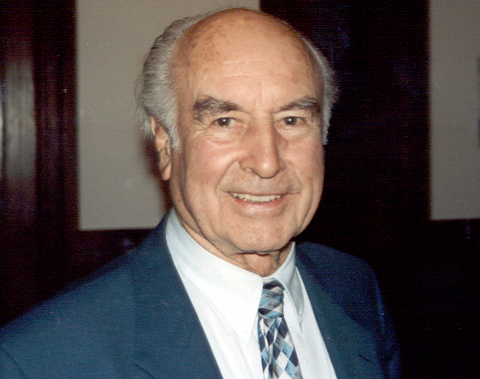
FIG. 1 · 1993-10 · CC BY-SA 2.5
Safety at a Glance
LSD (lysergic acid diethylamide)
A Friday afternoon at Sandoz
On Friday, April 16, 1943, by his own later account, the chemist Albert Hofmann stopped work in his laboratory at the Sandoz pharmaceutical company in the middle of the afternoon and went home. He felt a remarkable restlessness and slight dizziness. At home he lay down and, with his eyes closed against daylight that seemed unpleasantly glaring, saw what he described as an uninterrupted stream of fantastic pictures and shapes in an intense, kaleidoscopic play of colour. After about two hours the condition faded HOF-H01, PDF p. 12.
Hofmann tells this story in LSD—My Problem Child, a memoir published in English in 1980. He quotes a report he says he sent at the time to Professor A. Stoll HOF-H01, PDF pp. 1, 12. That report, and a laboratory-journal entry from three days later, reach us through the memoir. They are a firsthand account, but a retrospective one, and the original 1943 documents have not been independently checked against the archives.
What Hofmann had been making that afternoon was not new. He had first synthesised it five years earlier, and Sandoz had discontinued its testing. The compound was lysergic acid diethylamide, known in the laboratory as LSD-25. The story of 1943 is not the story of LSD's invention. It is the story of a discontinued line of research that Hofmann revisited, revealing effects the earlier tests had missed.
The world of ergot
In the years before 1938, Hofmann worked in Sandoz's research on ergot alkaloids, a family of compounds with powerful effects on the body. His memoir describes the programme's practical goals. One success was the first artificial production of the natural ergot alkaloid ergobasine. Hofmann describes it as valuable in obstetrics because it makes the uterus contract and helps stop bleeding, and because Sandoz could now make it from other, more abundant ergot alkaloids. An improved version became the obstetric medicine Methergine HOF-H01, PDF p. 10.
Within that programme, Hofmann also made a long series of new compounds from lysergic acid, the shared chemical core of these alkaloids. In 1938 he produced the twenty-fifth in the series: lysergic acid diethylamide, LSD-25 HOF-H01, PDF p. 10.
His stated aim for this particular compound was not obstetric. Hofmann writes that he designed it hoping to obtain a circulatory and respiratory stimulant, because its structure resembled a stimulant already in use at the time HOF-H01, PDF p. 10. That detail matters. Later summaries sometimes fold LSD into the ergot programme's obstetric work. In his own account, LSD-25 had a different purpose.
When Sandoz's pharmacologists tested it, the results did not impress them. Hofmann recalls that the research report noted, in passing, that experimental animals became restless, but the substance "aroused no special interest," and testing was discontinued HOF-H01, PDF p. 10. For five years, he writes, nothing more was heard of LSD-25.
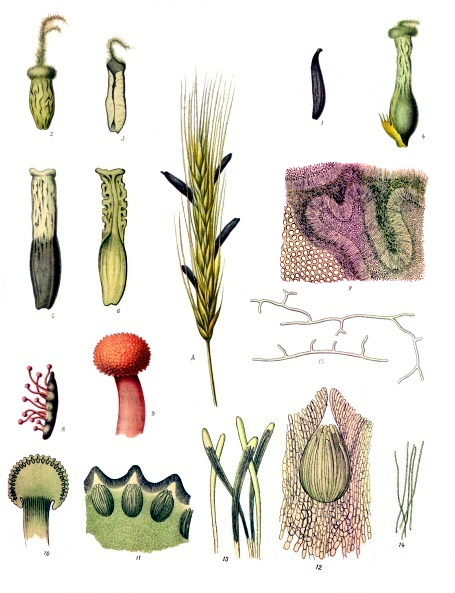
FIG. 2 · 1897 · PUBLIC DOMAIN
Spring 1943: a second look
Hofmann says he could not forget the compound. He describes "a peculiar presentiment," a feeling that it might have properties beyond those found in the first tests, and notes that it was unusual to revisit a substance once it had been dropped from the research programme. In the spring of 1943, he repeated the synthesis so that a fresh sample could go to the pharmacologists for further testing HOF-H01, PDF p. 11.
It was during the final stage of that work, by his account, that the episode of April 16 interrupted him HOF-H01, PDF p. 12.
How did it happen?
Hofmann suspected the substance he had been handling. That raised a question he could not answer with certainty: how had it got into his body? He writes that he kept meticulously neat work habits because ergot compounds were known to be toxic. He suggests that perhaps a trace of the solution touched his fingertips and was absorbed through the skin HOF-H01, PDF p. 12.
That is a hypothesis, and Hofmann presents it as one. His account does not establish the route of exposure, and it should not be retold as fact. What the memoir does establish is his conclusion at the time: if LSD-25 had caused the experience, it must be a substance of extraordinary potency HOF-H01, PDF p. 12.
April 19: a deliberate test
To find out, Hofmann decided to experiment on himself. The memoir reproduces his laboratory-journal entry for April 19, 1943. It records that within a short time he noticed dizziness, anxiety, visual distortions and an urge to laugh, and it ends abruptly. A later note says only that he went home by bicycle HOF-H01, PDF p. 12.
In the fuller account he wrote later, Hofmann describes asking his laboratory assistant to accompany him home. They went by bicycle because wartime restrictions limited the use of cars HOF-H01, PDF p. 12. In his own telling it was frightening, not festive. Everything in his field of vision wavered and distorted, and at home his surroundings took on threatening forms. He describes an overwhelming fear that he was going insane, and even that he might be dying HOF-H01, PDF p. 13.
By the time a doctor arrived, Hofmann writes, the worst had passed. The doctor found no abnormal signs apart from very dilated pupils, and his pulse, blood pressure and breathing were normal HOF-H01, PDF p. 13. As the fear receded, Hofmann began to notice the colours and shapes behind his closed eyes. He recalls that sounds seemed to turn into shifting images. The next morning, he writes, he woke clear-headed and with a strong sense of well-being HOF-H01, PDF pp. 13–14.
Two observations from that account shaped what came next. First, Hofmann concluded that he knew of no other substance that produced such profound psychological effects at such tiny amounts. Second, he noted that he could remember the experience in detail: even at its height he had known he was part of an experiment, yet could not will himself out of it HOF-H01, PDF p. 14. Both points help explain why researchers soon saw the compound as a tool for studying the mind.
These experiences are Hofmann's own recollections, written decades later. They are valuable as testimony about his experience. But they are one person's memory of a frightening day, not a controlled study, and nothing in them is a guide to what others would experience.

FIG. 3 · 1961-07-31 · CC BY-SA 4.0
What LSD does in the brain
Hofmann had no way of knowing in 1943 how the compound worked. Today's explanation, in plain terms, comes from the U.S. National Institute on Drug Abuse.
The brain's cells communicate partly through chemical messengers called neurotransmitters. One of them is serotonin. Neurotransmitters act by fitting into receptors, molecular structures on brain cells that work like receiving sites for a particular signal. NIDA groups LSD with psilocybin and similar drugs as "classic psychedelics," which act mainly on one type of serotonin receptor, called 5-HT2A NIDA-H01.
Stimulating those receptors in this way can, NIDA says, bring on vivid visions or sensations, alter a person's sense of self, and promote feelings of insight or connection NIDA-H01. That is a description of what the drug does, not of what it is good for. Knowing that LSD acts on serotonin receptors does not, by itself, show that it can treat any illness. That question needs clinical trials.
From laboratory curiosity to psychiatric hope
Hofmann writes that he quickly saw that a compound like this would interest pharmacologists, neurologists and especially psychiatrists HOF-H01, PDF p. 14. He was right. A systematic review in Frontiers in Psychiatry, published in 2020, notes that between the 1950s and the 1970s, LSD was studied for its effects on behaviour and personality, and in treating anxiety, depression, psychosomatic illness and addiction CLIN-H01.
That review is also a useful corrective to both enthusiasm and dismissal. Its authors searched for randomised, controlled trials, the kind of study best able to separate a drug's effect from hope and chance. They found 11 such articles, together involving 567 patients CLIN-H01. Most of the older studies, they write, were not performed to contemporary standards. Even so, many reported positive short-term changes, with the strongest evidence for treating alcoholism. In some studies, however, the LSD and control groups ended up looking similar at long-term follow-up CLIN-H01.
The authors also point to a basic difficulty. LSD's effects are obvious to both the patient and the observer, which makes a truly "double-blind" trial, in which nobody knows who received the drug, extremely hard to run. Outcomes also seemed to depend heavily on the patient's mindset and the setting, sometimes summarised as "set and setting." Their conclusion was that LSD is a potential therapeutic agent, and that new studies meeting modern standards are needed CLIN-H01.
A modern pilot study
One of the few modern controlled studies shows both the promise and the limits. In a pilot trial published in 2014, Peter Gasser and colleagues enrolled 12 patients whose anxiety was associated with life-threatening illnesses in a trial of LSD-assisted psychotherapy. The sessions took place within a programme of drug-free psychotherapy and under medical supervision TRIAL-H01. The researchers reported anxiety reductions at two months and no treatment-related serious adverse events. The 12-month follow-up also found sustained reductions, but took place after unblinding and included participants from an open-label crossover; it was not a continuing blinded comparison TRIAL-H01.
The authors were candid about the weaknesses. The sample was very small. Blinding failed to conceal assignment reliably: participants correctly identified their assigned treatment in every blinded session, and therapists were correct in nearly all sessions TRIAL-H01. A study like this justifies larger trials. It does not show that LSD is an effective treatment in general, and it says nothing about the safety of unsupervised use.
What remains uncertain
Some of the most familiar parts of the 1943 story rest on a single source. The dates, the report to Stoll, the journal entry and the bicycle ride all come to us through Hofmann's memoir, which reproduces earlier documents but was published decades after the events. Independent archival confirmation of that chronology is still needed. How Hofmann was first exposed on April 16 remains, as he himself framed it, a possibility rather than a finding.
LSD's later history is a separate story: how Sandoz distributed the compound to researchers, how it spread beyond medicine, and how and when governments moved to control it. Hofmann himself writes that in 1943 he had no inkling LSD would ever be used outside medical science HOF-H01, PDF p. 14. Those later chapters need their own evidence and should not be read back into what happened in a Sandoz laboratory in April 1943.
Altering the mind on purpose
Cheating to Win is a history of people trying to change what a human being can do and experience. LSD belongs in that history in a particular way. It was not designed to alter consciousness. Hofmann was looking for a stimulant for the circulation and breathing. But once its effects were recognised, it became a tool for deliberately changing perception and the sense of self, and studying those changes.
That is the real legacy of 1943. A forgotten compound became a way of probing the relationship between brain chemistry and inner experience. The 2020 review describes renewed research interest alongside ethical, legal and methodological obstacles CLIN-H01. It also carries a warning. The same properties that made LSD fascinating to researchers make it unpredictable and potentially dangerous outside carefully controlled settings. Hofmann's first deliberate test, by his own account, began in terror.
Substance Status & Safety
LSD (lysergic acid diethylamide). United States, federal. Checked October 30, 2026. Historical and informational; not medical advice.
Legal and regulatory status (today)
- Controlled-substance schedule: Schedule I under 21 CFR §1308.11(d)(22), substance code 7315 (page current through Oct 28, 2026; checked Oct 30, 2026) LAW-H01.
- Medical use: the DEA describes LSD as having no currently accepted medical use in the United States REG-H01. LSD continues to be studied in clinical research CLIN-H01; TRIAL-H01. Research use is not the same as an approved medicine, and no FDA-approved LSD product is identified in the sources reviewed. A product-specific FDA search has not been completed.
- Not an off-label prescription drug: with no approved product identified, LSD should not be thought of as an ordinary prescription medicine used "off label."
Historical status (1938–1943)
- In 1938 and 1943, LSD-25 was an experimental compound in Sandoz's laboratory research HOF-H01, PDF pp. 10–12. This article's sources do not establish its legal status at the time, or the dates of its later commercial distribution and control.
What the evidence shows about risks
- Mental and behavioural: LSD can cause intense fear, anxiety, confusion or panic, and can impair thinking and perception in ways that lead to dangerous behaviour and injuries, particularly without someone present to help NIDA-H01; REG-H01.
- Physical: NIDA lists headache, nausea or vomiting, high blood pressure, rapid heartbeat and trembling across psychedelic and dissociative drugs. This broad summary does not establish the frequency or severity of each effect specifically for LSD NIDA-H01.
- Poison-centre data are a selected sample: agitation, rapid heartbeat, confusion and vomiting are among effects reported in poison-centre data involving LSD and psilocybin NIDA-H01. Among people who called U.S. poison centres about LSD between 2000 and 2016, some were admitted to critical care NIDA-H01. These callers are people who sought help. They do not show how often harm occurs among everyone who uses LSD.
- Vulnerable groups: NIDA notes evidence that psychedelics might trigger schizophrenia-like illness in people with predisposing factors. Modern trials exclude people with diagnosed psychosis or bipolar disorder as a precaution, and the low rates of complications seen in those screened, supervised studies do not apply automatically to anyone else NIDA-H01.
- Interactions and contamination: NIDA describes suspected interactions involving psychedelic drugs and serotonin-raising medicines, while emphasizing that reported cases are exceedingly rare and more research is needed. That class-level caution does not establish the risk for a particular LSD–medicine combination. Products sold as LSD may instead contain other substances NIDA-H01. A full interaction review has not been done for this article.
- Persisting perceptual effects: a rare condition, hallucinogen persisting perception disorder, is described by NIDA across some psychedelic and dissociative drugs. Recurring perceptions can persist or return years later and cause distress; the evidence is limited and does not establish a reliable LSD-specific incidence NIDA-H01.
- Lethal-dose evidence: no reliable universal human lethal-dose threshold is established in the sources reviewed. This is a statement about the limits of the evidence examined, not a finding that LSD is harmless. No animal-derived figure is presented here, because it would not translate to a human threshold.
Clinical research, in context
- A systematic review published in 2020 found promising but methodologically limited evidence from randomised trials, strongest for alcoholism, and called for new studies meeting modern standards CLIN-H01.
- A 2014 pilot study enrolling 12 patients reported reduced anxiety under supervised psychotherapy. Its small sample, readily identified treatment assignments and unblinded long-term follow-up limit the conclusions TRIAL-H01. Neither establishes LSD as an approved or general treatment.
If you or someone else may have been exposed
- Call U.S. Poison Control at 1-800-222-1222 (free and confidential), or use the web POISON CONTROL tool. If the person collapses, has a seizure, has trouble breathing or can't be awakened, call 911 HELP-H01.
Sources & Further Reading
Historical details rely on Hofmann’s retrospective memoir; the original 1943 archival documents were not independently inspected. Clinical sources below describe evidence available at their publication dates.
- HOF-H01 Albert Hofmann, LSD—My Problem Child, trans. Jonathan Ott (McGraw-Hill, 1980). Retrospective memoir; PDF hosted by MAPS: https://maps.org/images/pdf/books/lsdmyproblemchild.pdf. Only PDF pp. 1–2 and 10–14 used; page numbers are PDF file pages.
- NIDA-H01 National Institute on Drug Abuse, "Psychedelic and Dissociative Drugs." https://nida.nih.gov/research-topics/psychedelic-dissociative-drugs
- CLIN-H01 Fuentes JJ, Fonseca F, Elices M, Farré M, Torrens M. "Therapeutic Use of LSD in Psychiatry: A Systematic Review of Randomized-Controlled Clinical Trials." Frontiers in Psychiatry 10:943 (2019; published January 21, 2020). https://doi.org/10.3389/fpsyt.2019.00943 (open access)
- TRIAL-H01 Gasser P, et al. "Safety and Efficacy of Lysergic Acid Diethylamide-Assisted Psychotherapy for Anxiety Associated With Life-threatening Diseases." Journal of Nervous and Mental Disease 202(7):513–520 (2014). https://doi.org/10.1097/NMD.0000000000000113 (open access via PMC)
- LAW-H01 21 CFR §1308.11(d)(22), Schedule I. https://www.ecfr.gov/current/title-21/chapter-II/part-1308/section-1308.11
- REG-H01 U.S. Drug Enforcement Administration, "LSD" fact sheet. https://www.dea.gov/factsheets/lsd
- HELP-H01 National Capital Poison Center, Poison Control. https://www.poison.org/
- Further reading (not used as evidence; full text not accessible to the editor or the writer): Nichols DE, "Psychedelics," Pharmacological Reviews 68(2):264–355 (2016), https://doi.org/10.1124/pr.115.011478; Passie T, et al., "The pharmacology of lysergic acid diethylamide: a review," CNS Neuroscience & Therapeutics 14(4):295–314 (2008), https://doi.org/10.1111/j.1755-5949.2008.00059.x
Explore the connections
- EVENT The Birth of Nootropics
- EVENT The Man Who Wanted to Be More
- PERSON Albert Hofmann
- TOPIC Psychedelics
- TOPIC Human Enhancement Ethics