EVENT / 1990 / CULTURE
The Man Who Wanted to Be More
Page six
In the summer of 1990, issue number 6 of a small magazine called Extropy carried an essay titled "Transhumanism: Towards a Futurist Philosophy." Its author, Max More, predicted rapid expansion in human knowledge, freedom, intelligence, lifespan and control over experience ORIG-T01.
On that first page More distinguished humanism, grounded in reason and science, from a transhumanism that anticipated radical changes in human existence. He pointed to developments in brain science, nanotechnology, artificial intelligence and space habitation. He also described a possible future posthuman philosophy, while identifying extropianism as the particular transhumanist approach being developed in the magazine ORIG-T01.
That page is a good place to start a history of transhumanism, so long as we are clear about what it is. It is not the moment the word was invented, nor the first time anyone hoped to exceed human limits. More himself recalls writing the essay in 1989, and says he had been setting out transhumanist ideas since Extropy began in 1988 AUTHOR-T02. What the 1990 essay did was to state, in one place, a philosophy of deliberate self-transformation and to place it alongside other ways people make sense of life. That is why it makes a useful milestone.
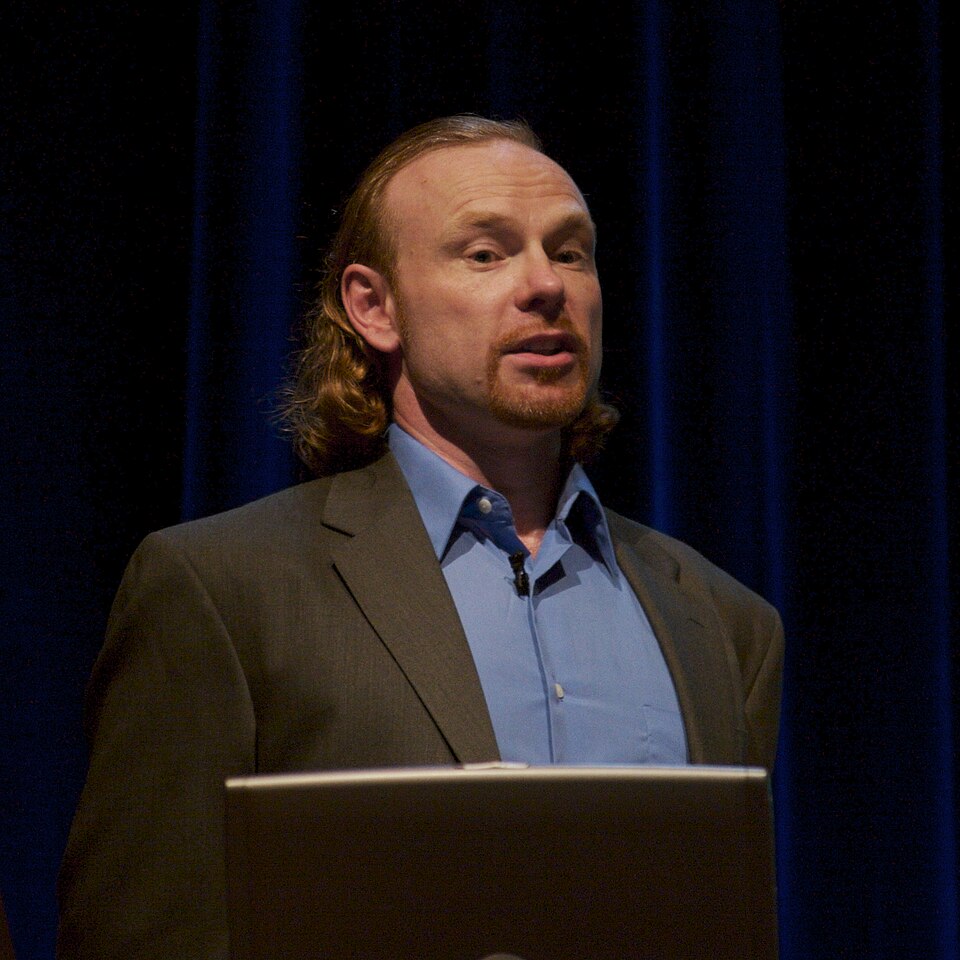
FIG. 1 · 2006-05-13 · CC BY-SA 2.0
An old wish, a newer word
The desire to exceed ordinary human limits has a long history. Nick Bostrom, a co-founder of the World Transhumanist Association, places the movement within that older tradition in his retrospective history HIST-T03.
The word also predates More's essay. Bostrom points to biologist Julian Huxley's use in New Bottles for New Wine (1957). The Humanity+ FAQ treats the attribution cautiously and distinguishes Huxley's meaning from the movement's later usage HIST-T03; FAQ-T05. Neither account establishes the earliest coinage here: Huxley's original text has not been examined for this article. More's contribution was a particular modern formulation, rather than the invention of the word.
Bostrom also discusses eugenics, including coercive state programmes, as a dark part of the history of attempts to improve humanity HIST-T03. That history makes consent and the power to define improvement essential questions for any account of human enhancement.
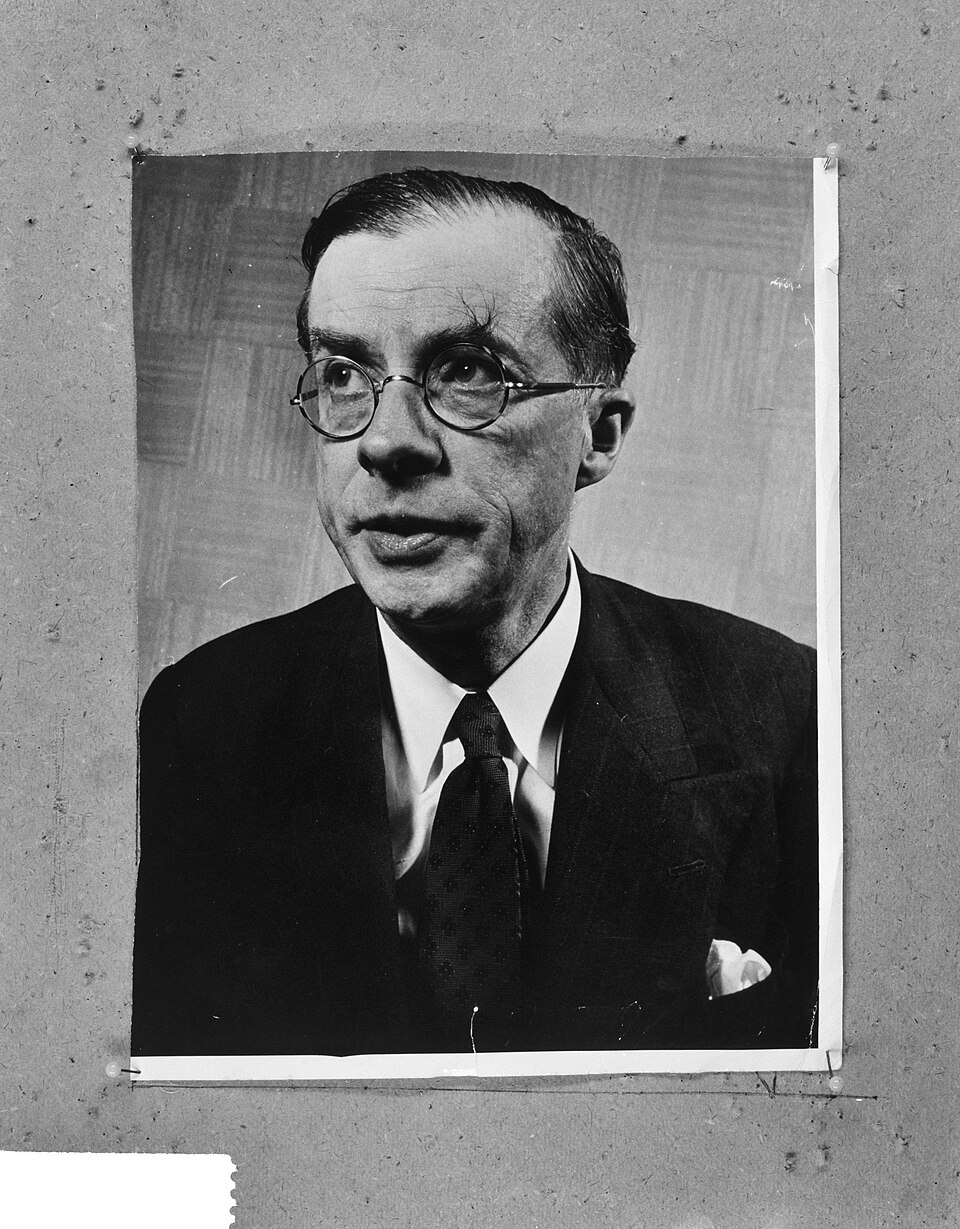
FIG. 2 · 1964-02-12 · CC0 1.0
What More was arguing
More's essay was, above all, a philosophy. It was an argument about values and choices, not a description of technology that already worked.
On page 6, he criticises religion as an obstacle to human development, while recognising its historical role in providing meaning. He presents humanism as an advance that still needs revision, and discusses ways to build a meaningful life without faith or dogma ORIG-T01.
These are More's arguments for a particular audience in 1990. They should not be taken as the position of every transhumanist.
The page names four extropian values: Boundless Expansion, Self-Transformation, Dynamic Optimism and Intelligent Technology ORIG-T01. Bostrom describes the name extropy as a metaphorical opposite of entropy HIST-T03. It is a philosophical metaphor here, not a claim to have overturned a physical law.
In plain language, then:
- Humanism bases values on human reason and potential rather than on the supernatural ORIG-T01.
- Transhumanism, in More's 1990 formulation, adds the expectation that science and technology will radically change the conditions of human existence, and embraces that change ORIG-T01.
- Posthuman, as the Humanity+ FAQ later put it, refers to possible future beings whose basic capacities would so radically exceed ours that they would no longer be unambiguously human by current standards FAQ-T05.
- Extropianism was More's particular version, with its own named values ORIG-T01.
The essay that kept changing
More's current republication differs from the original. In December 2023 he republished the essay in his newsletter, Extropic Thoughts, with a new introduction and a notice identifying revisions made in June 1994 and in 1996 AUTHOR-T02.
The changes matter. The revised opening substitutes wisdom for control over experience. The original page uses both reliberium and eupraxophy in discussing nonreligious life philosophies; the republication uses eupraxosophy. It also promotes extropianism from a particular version of transhumanism to the foremost version, and lists five values rather than four, adding Spontaneous Order ORIG-T01; AUTHOR-T02. These are different stages of an evolving argument.
The Humanity+ FAQ supplies another definition attributed to More in 1990 FAQ-T05. Its exact source has not been established for this article, so it is not reproduced here as language from the original essay.
More's later introduction and Bostrom's history both credit the essay with defining modern transhumanism AUTHOR-T02; HIST-T03. Their assessments help explain its significance within the movement. Both authors were participants, and their priority claims require that context.
From a magazine to a movement
One essay does not make a movement. Bostrom's history describes the network that grew around it. More and Tom Morrow published the first issue of Extropy in 1988, and in 1992 they founded the Extropy Institute HIST-T03. The Institute held conferences, but in Bostrom's view its most important creation was the extropians mailing list, an online forum where new ideas were shared and argued over, and where, in the mid-1990s, many people first encountered transhumanist views HIST-T03.
Transhumanism soon outgrew a single branch. In early 1998, Bostrom and David Pearce founded the World Transhumanist Association, which sought to coordinate transhumanist groups across political differences HIST-T03. Its two founding documents were the Transhumanist FAQ and the Transhumanist Declaration HIST-T03.
The Declaration was itself a collective work. Humanity+, the organisation that now hosts it, says it was originally crafted in 1998 by an international group of more than twenty authors, including More, Natasha Vita-More, Anders Sandberg, David Pearce and Bostrom. It was modified over the years and adopted by the Humanity+ board in March 2009 DECL-T04. The text that appears today is therefore a later version, not a document from 1990 or necessarily the original 1998 wording.
The movement also became politically diverse. Bostrom describes how the early extropians combined liberal cultural views with free-market economics. By contrast, the sociologist James Hughes, in 2004, set out a "democratic transhumanism" that paired the same hopes for technology with social-democratic economics, emphasising safety, universal access and bodily self-determination HIST-T03. Transhumanism, in short, is a family of positions. Extropianism is one branch of it, not the whole tree.
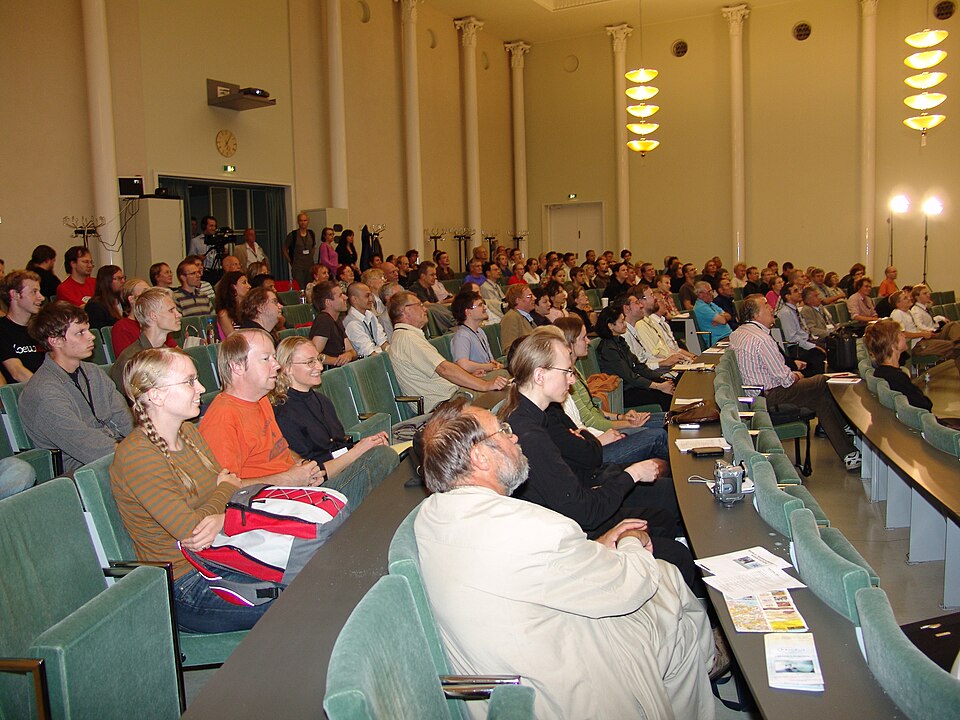
FIG. 3 · 2006-08-17 · CC BY 2.0
What the declaration hopes for
The displayed Declaration proposes extending human possibilities in areas such as aging, cognition, suffering and life beyond Earth. It also acknowledges serious risks, including technological misuse, and rejects the assumption that every change is an improvement DECL-T04.
Its ethical commitments include personal autonomy, global concern and an inclusive approach to policy. Its final point supports broad individual choice, describing potential techniques for memory and concentration, life extension, reproduction and cryonics DECL-T04.
Those passages express aspirations and principles. They do not demonstrate that a proposed technology works, is safe or will arrive on a particular timetable. Readers should also keep the document's later revisions in view when comparing it with More's 1990 essay.
The critics' questions
An institutional critique offers another way into these questions: Beyond Therapy, a 2003 report by the U.S. President's Council on Bioethics, which examined using biotechnology for purposes "beyond therapy." Its chapter of general reflections lays out a series of concerns CRIT-T06:
- Safety and bodily harm: interventions in healthy people raise their own risks.
- Fairness: enhancements may confer unfair advantages, although the council notes that some people see them as a way to offset natural inequalities.
- Equality of access: the council judges distributive justice the more important issue, warning that costly enhancements could deepen existing inequalities, especially if some people cannot obtain treatments for serious illness while others buy improvements for purposes the council regarded as less pressing.
- Liberty and coercion: pressure can be overt or subtle, and can arise within families as well as from states.
- Hubris: the council treats overconfidence in human mastery as a concern that can be shared by religious and nonreligious people.
- Identity and flourishing: changes that bypass understanding might not feel genuinely our own, and it is unclear whether goals such as ageless bodies would actually make lives better.
These arguments are the council's, made in a particular political moment. They do not settle any empirical question or speak for every critic. But they show that the debate is not simply science against superstition. Advocates and critics both talk about risk, fairness and human welfare. They differ over who should choose, how much uncertainty is acceptable, and what a good human life is for.
A thread through other histories
On this site, the 1990 essay sits alongside other milestones: synthetic hormones, the contraceptive pill, the measurement of stem cells, and the naming of "nootropics." The Declaration's list of hoped-for technologies, from memory aids and life extension to reproductive choice, reads almost like a table of contents for those stories DECL-T04.
That is a thematic connection, not a causal one. The sources used here do not establish direct influence between these developments and More's philosophy. His essay offered one framework for a question those histories keep raising: if humans can deliberately change their own biology, should they, and on whose terms?
A philosophy, not a forecast
More's 1990 essay predicted that a posthuman philosophy would probably not be formulated before the late twenty-first century ORIG-T01. Whether that turns out to be right is not something the sources here can judge. The essay is a statement of hope and values, not a demonstration that radical life extension, uploaded minds or superintelligence are achievable.
That is exactly what makes it a milestone worth understanding. It gave an explicit set of values to one strand of an already developing network of futurist ideas and communities. The arguments that followed, between advocates who see deliberate self-transformation as humanity's next step and critics who ask what might be lost on the way, are still going on.
Sources & Further Reading
- [ORIG-T01] Max More, "Transhumanism: Towards a Futurist Philosophy," Extropy #6 (Summer 1990), pp. 6–12. Community archive: https://extropy.agoraops.org/issues/06/transhumanism-towards-a-futurist-philosophy/ (Only the original printed p. 6 was examined, as a page image. Quotations come from that page.)
- [AUTHOR-T02] Max More, "Transhumanism: Toward a Futurist Philosophy," Extropic Thoughts, December 23, 2023. https://maxmore.substack.com/p/transhumanism-toward-a-futurist-philosophy (Republication of a version revised in June 1994 and 1996, with a new introduction; not identical to the 1990 text.)
- [HIST-T03] Nick Bostrom, "A History of Transhumanist Thought," Journal of Evolution and Technology 14(1) (April 2005); slightly edited version reprinted 2011. https://nickbostrom.com/papers/a-history-of-transhumanist-thought/ (A participant's history.)
- [DECL-T04] Humanity+, "The Transhumanist Declaration" (originally crafted 1998; modified; adopted by the Humanity+ board March 2009). https://www.humanityplus.org/the-transhumanist-declaration
- [FAQ-T05] Humanity+, "Transhumanist FAQ" (evolving movement document). https://www.humanityplus.org/transhumanist-faq
- [CRIT-T06] President's Council on Bioethics, Beyond Therapy: Biotechnology and the Pursuit of Happiness (Washington, DC, October 2003), chapter 6, "Beyond Therapy: General Reflections." https://sitearchives.georgetown.edu/kie-pcbe/reports/beyondtherapy/chapter6.html
Explore the connections
- EVENT The Experiments That Made Stem Cells Measurable
- EVENT The Birth of Nootropics
- EVENT The Accidental Discovery That Changed Consciousness Research
- PERSON Max More
- PERSON Tom Morrow
- TOPIC Transhumanism
- TOPIC Longevity
- TOPIC Cryonics
- TOPIC Human Enhancement Ethics